31 Dec 2025
Updated on February 17th, 2026
A Complete Guide on Medicine Delivery App Development

Matthew Connor




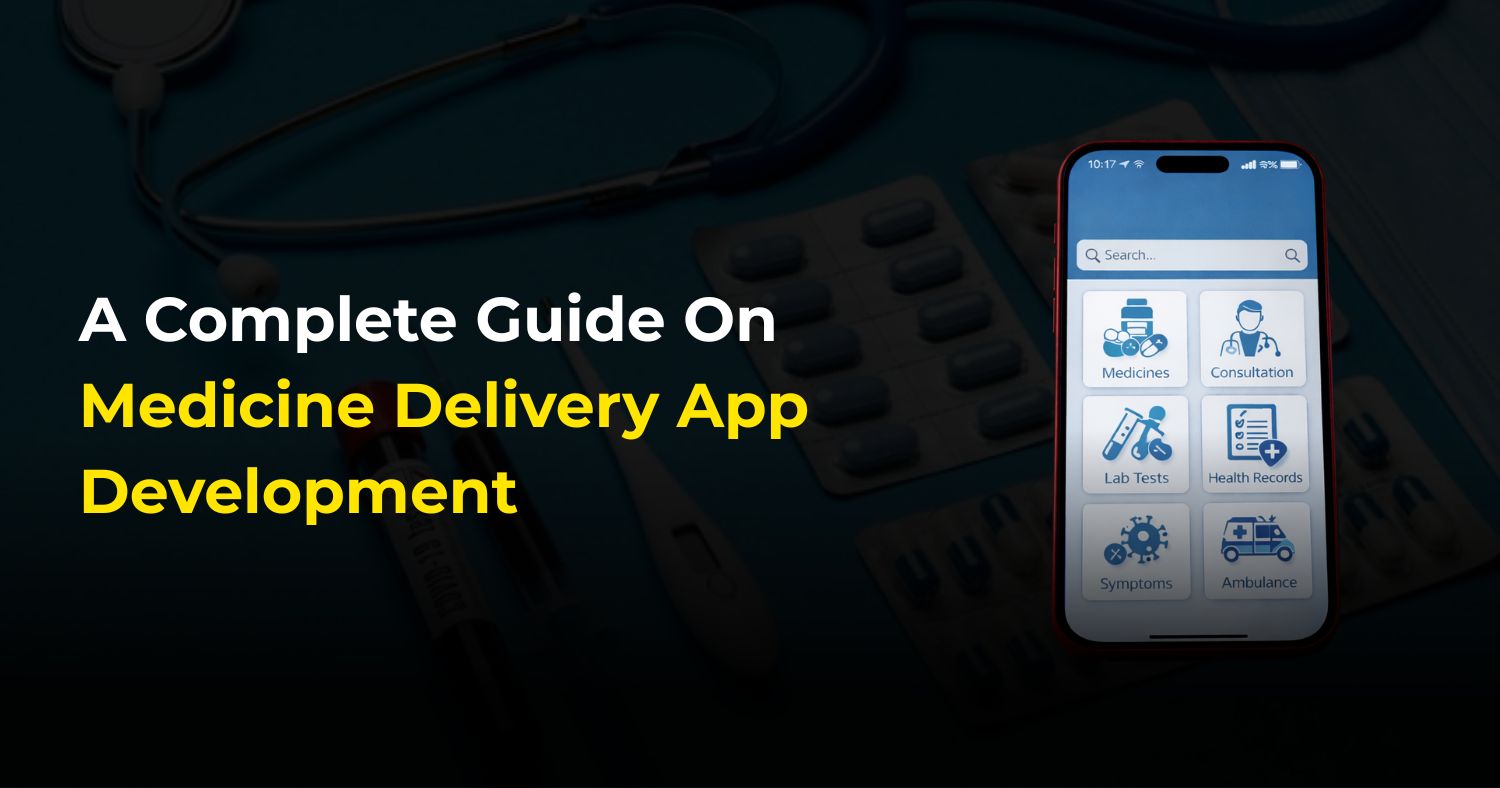
Medicine Delivery App Development is transforming the way people access healthcare, offering a convenient solution for ordering medicines online and receiving them at home. In today’s fast-paced world, users want quick, reliable, and safe delivery of their prescriptions without visiting multiple pharmacies.
The rise of digital healthcare has made medicine delivery apps not only a necessity for customers but also a lucrative business opportunity for pharmacies and healthcare providers. These apps bridge the gap between patients and medical stores, providing real-time order tracking, easy prescription uploads, and secure payment options.
For businesses, investing in medicine delivery app development allows expanding customer reach, improving operational efficiency, and building stronger relationships with patients. With the right features, user-friendly design, and robust backend support, these apps enhance convenience, trust, and engagement, making them an essential part of the modern healthcare ecosystem.
What Is a Medicine Delivery App?
A medicine delivery app is a mobile or web application that allows users to order medicines online and have them delivered directly to their doorstep. These apps serve as a digital bridge between customers and pharmacies, medical stores, or hospitals, streamlining the process of buying medications while saving time and effort.
With the increasing reliance on smartphones and the demand for convenience, medicine delivery app development has become a crucial part of modern healthcare solutions. These apps provide a platform where users can find, order, and pay for medicines without physically visiting a pharmacy.
How Medicine Delivery Apps Work
The functionality of these apps typically revolves around four main features:
- Search for Medicines: Users can browse or search for medicines by name, brand, or category. Advanced filters allow them to find generic alternatives, check prices, and view availability in nearby pharmacies.
- Prescription Upload: For prescription medicines, users can upload digital copies of their prescriptions. This ensures compliance with medical regulations and helps pharmacies verify orders accurately, reducing the risk of errors.
- Order Placement and Payment: Users can place orders with just a few taps and pay using multiple methods such as UPI, credit/debit cards, e-wallets, or cash on delivery. Seamless payment integration ensures convenience and security.
- Real-Time Delivery Tracking: Customers can track their orders in real-time from the pharmacy to their doorstep, allowing for a transparent and reliable delivery experience.
Benefits of Medicine Delivery Apps for Businesses
Medicine delivery apps are beneficial not just for customers but also for businesses. They allow pharmacies and healthcare providers to grow digitally without investing in additional physical outlets.
Key Business Benefits:
- Wider Customer Reach: Medicine delivery apps allow pharmacies to connect with customers beyond their physical store. Businesses can serve multiple cities, reach new audiences, and increase brand visibility.
- Increased Sales: Convenient access to medicines encourages users to purchase more frequently. Monthly subscriptions or refill reminders can boost recurring revenue and customer retention.
- Better Order Management: Online platforms streamline the entire order process. Pharmacies can track orders in real-time, reduce human errors, and manage multiple requests efficiently.
- Reduced Manual Work: Automation of billing, inventory updates, notifications, and reminders saves time and reduces operational costs, allowing staff to focus on other essential tasks.
- Stronger Customer Loyalty: Timely delivery, accurate orders, personalized offers, and a seamless digital experience increase customer satisfaction, trust, and long-term loyalty.
- Competitive Advantage: Having a digital presence helps pharmacies stay ahead of competitors by offering convenience and faster service to tech-savvy customers.
- Data Insights: Apps collect valuable data on customer behavior, purchase trends, and popular products, helping businesses make informed decisions and improve service quality.
Partnering with a trusted medicine delivery app development company in USA ensures that businesses get reliable, scalable, and secure apps that support long-term growth.
Types of Medicine Delivery Apps
Understanding the types of medicine delivery apps is crucial before starting development. Different business models serve different needs and objectives.
Pharmacy-Based Apps
These apps are owned by a single pharmacy or medical store. Orders are fulfilled from their own stock.
- Pros: Full control over inventory, direct interaction with customers.
- Cons: Limited reach unless the pharmacy is part of a chain.
Aggregator Apps
Aggregator apps connect users with multiple pharmacies in various locations. Users can compare prices, check stock availability, and order from their preferred pharmacy.
- Pros: Broader selection of medicines, flexible for users.
- Cons: Requires more complex backend management and partnerships with multiple pharmacies.
Hospital-Based Apps
Hospitals use these apps to provide medicines directly to patients after consultations.
- Pros: Ensures compliance with prescriptions and improves patient care.
- Cons: Mostly tied to hospital patients; limited general audience.
Each model has unique benefits, and businesses should choose based on their target audience, operational capacity, and business goals.
What Are the Must-Have Features of a Medicine Delivery App?
Features play a critical role in shaping how users experience your app. Well-planned features improve usability, trust, and overall performance.
User Features
- Easy Signup & Login: Users can quickly create accounts using email, phone numbers, or social media. Secure login ensures data safety and a seamless first-time experience.
- Search Medicines: Find medicines instantly by name, category, or brand. Advanced filters help locate alternatives or generic options.
- Upload Prescription: Users can upload prescriptions directly through the app. This ensures accurate dispensing, avoids errors, and simplifies the verification process.
- Order History: Keep track of all past orders. Users can reorder regularly used medicines in just a few taps, saving time and effort.
- Push Notifications: Receive alerts for order status, refill reminders, exclusive discounts, or promotions. Keeps users engaged and informed.
- Multiple Payment Options: Support for cards, UPI, e-wallets, and cash on delivery ensures convenience and flexibility for all users.
Pharmacy Features
- Manage Orders: Pharmacies can accept or reject incoming requests, prioritize urgent orders, and streamline workflow.
- Inventory Management: Track stock in real-time to avoid shortages or overstocking. Automated alerts for low stock enhance efficiency.
- Prescription Verification: Pharmacies can verify uploaded prescriptions, ensuring compliance with medical regulations and maintaining customer safety.
- Order Tracking: Monitor the order status from acceptance to delivery, enabling pharmacies to provide timely updates and maintain reliability.
- Customer Communication: Direct messaging or notification system to inform customers about order status or substitutions if required.
Admin Features
- Dashboard: Provides a detailed overview of all app activities, including active users, pharmacies, orders, and revenue metrics.
- Payment & Commission Control: Track all transactions, calculate commissions for partner pharmacies, and manage refunds or adjustments efficiently.
- User & Pharmacy Management: Admins can add, suspend, or manage accounts, ensuring smooth platform operations and security.
- App Performance Monitoring: Monitor app performance metrics, identify errors, track uptime, and optimize system efficiency.
- Analytics & Reporting: Generate reports for sales, user behavior, and pharmacy performance, helping with strategic decision-making.
These enhanced features make the app comprehensive, scalable, and reliable, ensuring smooth operation for users, pharmacies, and administrators while building trust and engagement.
How to Build the Medicine Delivery App?
Building a medicine delivery app requires careful planning, strategic execution, and attention to detail. Each stage is critical to ensure the app is reliable, secure, and user-friendly. Here’s a step-by-step guide:
- Define Your App Idea: Start by clearly defining your medicine delivery app idea. Determine the type of app, target audience, and operational scope. Decide whether it serves a single pharmacy or multiple outlets and which cities or regions it will cover. A precise vision guides development, ensures feature alignment with business goals, and lays the foundation for a successful, well-planned app project.
- Conduct Market Research: Market research validates your app idea and identifies industry trends. Analyze competitors to learn what works, spot gaps, and understand user needs. Evaluate pricing and monetization models to create a competitive strategy. Comprehensive research reduces risks, informs development decisions, highlights opportunities, and ensures your app delivers unique value to customers in the competitive medicine delivery landscape.
- Choose the Right Platform: Select the platform that best reaches your audience: Android, iOS, or both, using cross-platform tools like React Native or Flutter. Android targets a broader user base, while iOS serves premium users. Cross-platform development saves time and cost. Choosing the right platform ensures accessibility, maximizes reach, and helps your medicine delivery app connect effectively with your target users.
- App Design (UI/UX): Design your app with a clean, intuitive interface to enhance usability and trust. Focus on simple navigation, clear text, and large buttons, making it accessible to all users, including the elderly. Good UI/UX improves engagement, simplifies ordering, and creates confidence in your service. A well-designed interface encourages repeat use and strengthens user loyalty to your platform.
- App Development: App development transforms designs into a functional platform. This includes front-end design, back-end setup, database creation, and security integration. The front-end ensures a smooth interface, the back-end handles operations and data, and the databases secure user and pharmacy information. Security features protect sensitive data. Experienced developers ensure all elements work efficiently, creating a reliable and professional medicine delivery app.
- Testing the App: Testing ensures your app functions correctly and meets healthcare standards. Functional testing verifies features, performance testing checks speed and stability, and security testing protects sensitive data. User testing gathers feedback on usability and experience. Comprehensive testing minimizes errors, ensures reliability, and delivers a secure, trustworthy medicine delivery app that satisfies user expectations and industry requirements.
- App Launch: After testing, launch your app on stores and monitor performance carefully. Track engagement, address bugs immediately, and respond to user feedback. Collecting early reviews helps fine-tune features and improve the experience. A carefully managed launch ensures smooth operations, builds trust, and establishes a positive reputation among users, creating a strong foundation for the app’s long-term success.
- Maintenance and Updates: Post-launch, regular maintenance and updates are essential to keep your app functional and secure. Fix bugs, update features, enhance performance, and stay compliant with security standards. Add new functionality based on user feedback to maintain engagement. Continuous support ensures your medicine delivery app remains reliable, scalable, and competitive as your business grows and evolves in the healthcare industry.
Also Read About: Cost to Build a Medicine Delivery App
Conclusion
Medical Delivery Apps Change-Creating New Ways of Buying Medicine. They are comfortable, faster, and make it easier than ever for customers to find what they need in a pharmacy and pay for it.
For retailers, creating a medical delivery app is a great way to establish a relationship, reach more customers, and provide a better overall service experience to their customers.
Frequently Asked Questions
Related Posts

23 Sep 2025
How To Build Social Media App with Next Gen AI Power
The social media space is a crowded attention marketplace, with many platforms targeting user engagement. Building a new social app in this ecosystem ..
Matthew Connor

4 Mar 2025
Ultimate Guide to Building an AI App Step-by-Step
Artificial Intelligence (AI) is revolutionizing the world by making technology more efficient and companies more productive. From robotics that can pe..
Matthew Connor
Join the newsletter and get all the updates.
Subscribe
 +1 (443) 454-3676
 sales@whitehalltechnologies.com
 501 East Las Olas Blvd., Suite 200 and 300, Fort
Lauderdale, Florida, FL 33301
501 East Las Olas Blvd., Suite 200 and 300, Fort
Lauderdale, Florida, FL 33301


