28 Jan 2026
Updated on January 30th, 2026
Top Mistakes to Avoid When Building Top-Rated iOS Apps

Matthew Connor




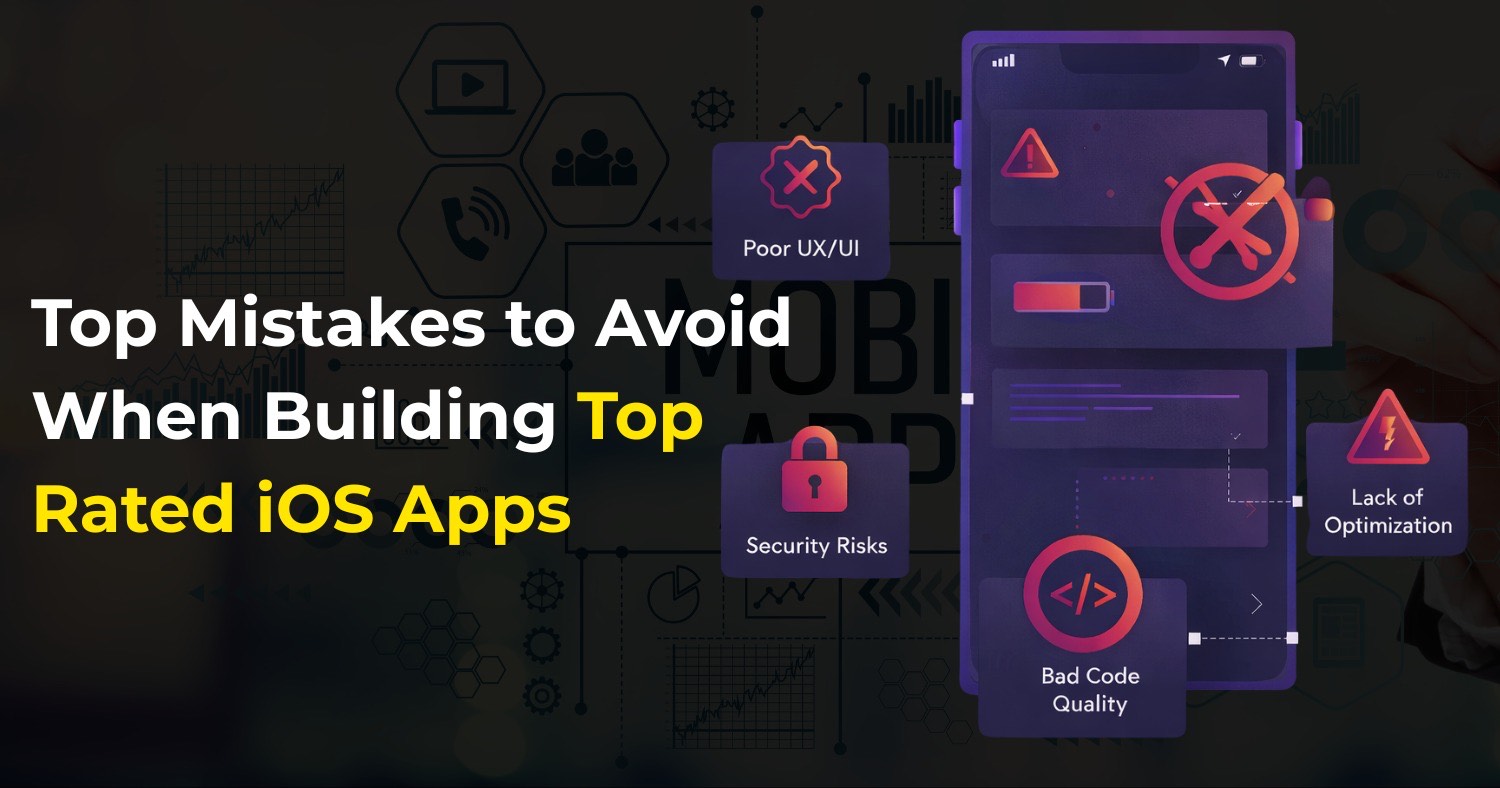
Building top-rated iOS apps requires more than a great idea—it demands careful planning, flawless execution, and rigorous testing. Many businesses struggle because they overlook common pitfalls, leading to apps that fail to engage users, crash frequently, or generate minimal revenue.
Understanding these mistakes early can save time, resources, and frustration. By avoiding critical errors in design, development, and deployment, your app can deliver a seamless user experience, attract positive reviews, and achieve higher App Store rankings.
In this guide, we’ll explore the top mistakes to avoid when building iOS apps, why they happen, and actionable tips to create high-performing, successful apps that stand out in the competitive App Store landscape.
What Makes iOS App Development Unique?
iOS app development is distinct due to Apple’s strict guidelines, its tightly controlled ecosystem, and seamless hardware-software integration. Creating top-rated iOS apps requires more than coding skills—it demands attention to design standards, performance optimization, and platform-specific features. Choosing custom iOS app development helps businesses maximize the benefits of custom iOS app development, including optimized UI, better performance, and unique Apple feature integration.
Key aspects that make iOS app development unique include:
- Adhering to Apple’s Human Interface Guidelines (HIG): Ensures apps are intuitive, visually appealing, and consistent with iOS design principles, which improves user experience and boosts App Store ratings.
- Optimizing for Multiple Devices: Developers must account for various iPhone and iPad screen sizes, resolutions, and aspect ratios to deliver a consistent experience across devices.
- Leveraging Apple-Specific Features: Features like Face ID, ARKit, Core ML, and SiriKit allow apps to provide unique functionalities that enhance engagement and usability.
- Ensuring Compatibility with Latest iOS Versions: Staying updated with the latest iOS releases ensures apps run smoothly, avoid crashes, and benefit from new features.
- Performance and Security Optimization: iOS users expect fast, secure apps. Optimizing memory usage, battery consumption, and implementing Apple’s security frameworks is critical.
Failing to account for these factors is one of the most common mistakes businesses make when relying on iOS application development services. Apps that overlook Apple’s ecosystem often suffer from poor reviews, low engagement, and decreased revenue potential.
Mistakes to Avoid When Building Top-Rated iOS Apps
Building a successful iOS app requires careful planning, execution, and continuous improvement. Avoiding common mistakes helps ensure better user experience, higher App Store ratings, and long-term success.
Mistake 1: Ignoring Market Research
Many developers skip proper market research, assuming their idea alone will succeed. This often leads to apps with low adoption and poor engagement. Conducting surveys, competitor analysis, and user interviews is crucial to align top-rated iOS apps with actual market demand. Collaborating with an iOS mobile app development company in the USA can provide insights and expertise to identify gaps and opportunities.
Mistake 2: Poor UI/UX Design
Designing a visually appealing and user-friendly interface is essential, yet many apps fail because of inconsistent UI or complicated navigation. Users expect intuitive interactions, smooth transitions, and responsive layouts. Ignoring Apple’s Human Interface Guidelines, overloading screens with content, or confusing menus frustrates users and reduces retention. Investing in proper design, usability testing, and feedback loops ensures a seamless experience. Well-designed apps encourage engagement, positive reviews, and repeated usage, which are critical factors in achieving top ratings on the App Store.
Mistake 3: Overcomplicating the App
Adding too many features at launch can overwhelm users and increase development complexity. Feature bloat makes navigation confusing, introduces bugs, and slows performance. Users prefer simple, focused apps that solve specific problems. Launching with a Minimum Viable Product (MVP) helps gather feedback and iteratively enhance functionality. Prioritizing core features reduces development time and ensures stability. Avoid the temptation to include every idea at once, as doing so can harm adoption rates and reduce overall satisfaction, which ultimately affects the app’s rating and reputation.
Mistake 4: Ignoring App Performance
Performance issues are a major reason apps fail or receive negative reviews. Slow loading, crashes, memory leaks, and high battery usage frustrate users. Ensuring smooth operation across all iOS devices, optimizing code, and conducting extensive testing are crucial. Poor performance diminishes retention and engagement while lowering App Store rankings. Businesses should monitor analytics, fix bugs promptly, and optimize graphics and backend processes. High-performing apps provide a seamless experience, build trust, and encourage users to recommend the app to others, directly impacting long-term success.
Mistake 5: Skipping App Store Guidelines
Submitting an app without adhering to Apple’s App Store Review Guidelines can result in rejection, delays, or removal. Developers often overlook privacy, design, and content requirements, wasting time and effort. Understanding Apple’s standards for permissions, navigation, and data handling ensures smooth approval. Proper compliance not only prevents rejection but also enhances user trust. Following guidelines closely during development reduces rework, streamlines submission, and increases the likelihood of a successful launch, allowing the app to reach its intended audience without unnecessary obstacles.
Mistake 6: Neglecting Security
Security is often underestimated, yet apps handling sensitive data must ensure user information is protected. Weak authentication, unencrypted storage, and vulnerable APIs expose users to risks. Security breaches lead to loss of trust, bad reviews, and potential legal issues. Implementing biometric login, data encryption, and regular security audits is essential. Developers should stay updated on iOS security features and privacy regulations. Prioritizing safety from the start ensures user confidence and compliance, which is especially important for finance, health, or personal data-focused applications.
Mistake 7: Poor Testing and QA
Skipping thorough testing is a costly mistake. Apps with bugs, crashes, or compatibility issues frustrate users and reduce retention. Testing across multiple devices and iOS versions ensures smooth performance. Automated testing, manual QA, and beta releases help identify and fix errors early. Continuous monitoring after launch captures new issues and maintains stability. A solid QA process improves user satisfaction, boosts ratings, and reduces support costs. Proper testing is critical to maintaining a top-rated iOS app and ensuring long-term success.
Mistake 8: Ignoring Analytics and User Feedback
Many apps fail to leverage analytics or user feedback, missing opportunities for improvement. Understanding user behavior, feature usage, and pain points informs updates and feature prioritization. Collecting feedback through surveys, reviews, or in-app prompts ensures user needs are addressed. Ignoring these insights leads to stagnation and low engagement. Monitoring metrics like retention, session length, and crash reports helps make data-driven decisions. Continuous adaptation based on analytics and user input increases satisfaction, boosts ratings, and ensures the app remains competitive.
Mistake 9: Ineffective Marketing and Launch Strategy
Even high-quality apps fail if users aren’t aware of them. Lack of a marketing plan, poor app store optimization, or delayed promotion reduces downloads and engagement. Pre-launch campaigns, social media, influencer partnerships, and app store strategies improve visibility. Launching strategically with targeted messaging ensures the right audience finds the app. Combining marketing efforts with quality development increases adoption rates, encourages reviews, and builds a strong user base, which is essential for achieving top ratings on the App Store.
Mistake 10: Neglecting Post-Launch Support
Releasing an app without ongoing support damages user trust. Regular updates and monitoring maintain engagement and ensure your top-rated iOS apps continue to perform well. Regular updates, performance monitoring, and responsiveness to user feedback keep the app relevant. Neglecting this leads to frustration, uninstallations, and declining ratings. Continuous improvement not only satisfies existing users but also attracts new ones. Planning for post-launch support ensures long-term success and positions the app as reliable, responsive, and professional.
Conclusion
Building a top-rated iOS app requires more than a great idea—it requires meticulous planning, execution, and continuous improvement. By avoiding mistakes like ignoring market research, overcomplicating features, neglecting performance, skipping testing, and overlooking post-launch updates, businesses can ensure their apps succeed in the App Store.
Frequently Asked Questions
Related Posts

24 Feb 2026
How Much Does it Cost to Build an AI Powered Dating App in the USA
AI is changing online dating. Apps now use AI to study behavior, interests, and chats for better matches and safer experiences. Things like spotting f..
Matthew Connor

29 Jan 2026
How Custom AI Chatbot Development Services Can Boost Your Sales and Support
In today’s fast-paced digital world, custom AI chatbot development services can significantly enhance both sales and customer support for businesses o..
Matthew Connor
Join the newsletter and get all the updates.
Subscribe
 +1 (443) 454-3676
 sales@whitehalltechnologies.com
 501 East Las Olas Blvd., Suite 200 and 300, Fort
Lauderdale, Florida, FL 33301
501 East Las Olas Blvd., Suite 200 and 300, Fort
Lauderdale, Florida, FL 33301


