22 Jan 2026
The Impact of AI in Food Industry Apps on Efficiency and Profitability

Matthew Connor




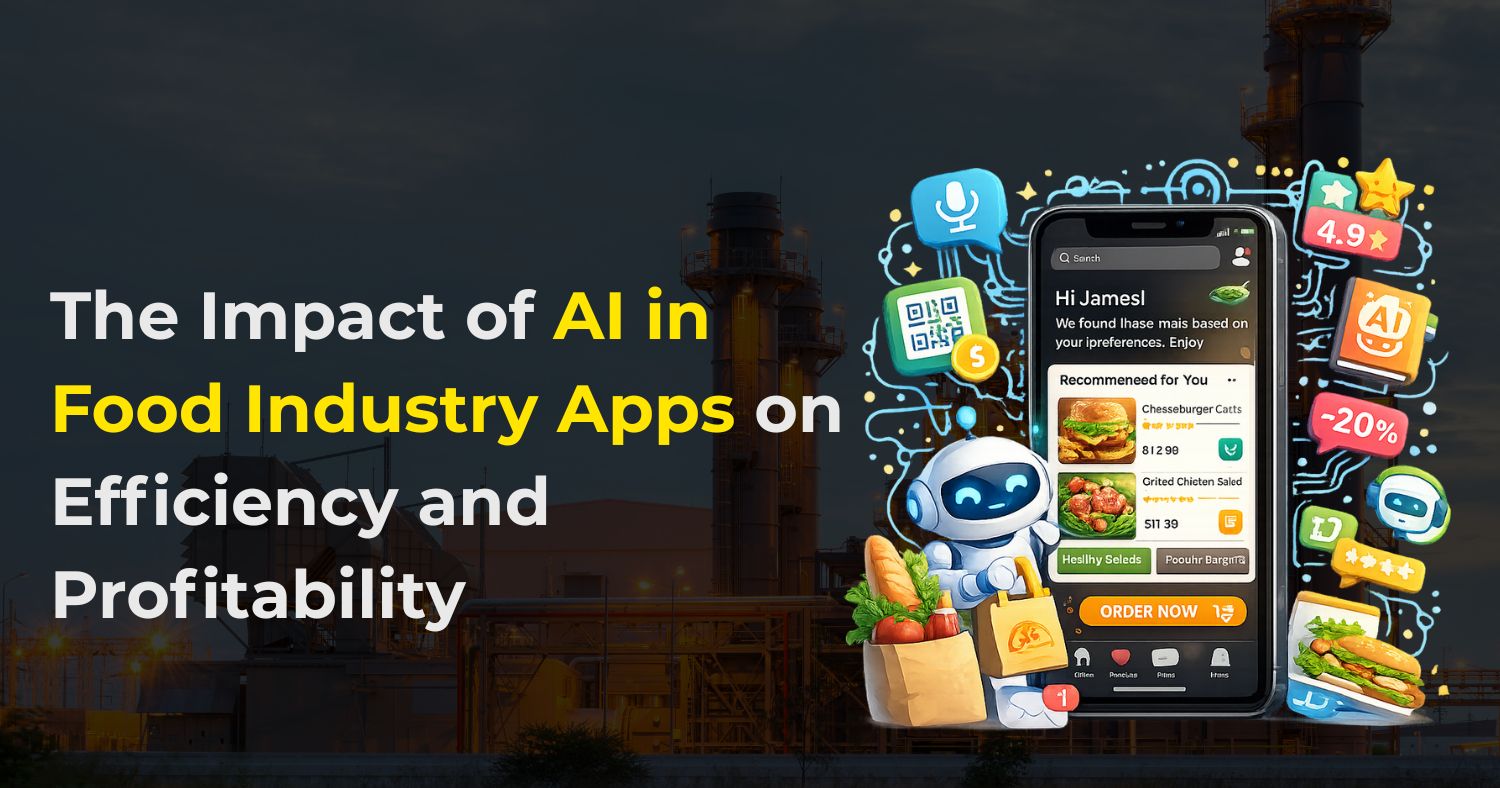
The food industry is evolving faster than ever, driven by changing customer expectations, rising competition, and rapid technological advancements. From food delivery platforms and restaurant management systems to cloud kitchens and grocery apps, technology is reshaping how food businesses operate. Among these innovations, AI in food industry apps has emerged as a powerful force transforming the way food businesses manage operations and enhance customer experiences.
AI is no longer limited to large enterprises. Today, even small and mid-sized food businesses use AI-powered apps to improve efficiency, reduce costs, and increase profitability. From anticipating customer demand to streamlining operations and personalizing user experiences, AI is essential for making food apps more intelligent, efficient, and profitable.
Understanding AI in Food Industry Apps
What Is AI in the Food Industry?
Artificial Intelligence refers to technologies that enable systems to learn from data, identify patterns, make decisions, and improve performance over time without constant human input. In the food industry, AI is used in mobile and web applications to automate processes, analyze data, and deliver personalized experiences.
AI-powered food apps can:
- Analyze customer behavior
- Predict demand and sales trends
- Optimize delivery routes
- Reduce food waste
- Improve customer satisfaction
By integrating AI, food businesses can shift from reactive operations to data-driven and predictive decision-making.
Why the Food Industry Is Adopting AI Rapidly
The food industry faces several challenges, such as rising operational costs, fluctuating demand, labor shortages, and high customer expectations. AI helps overcome these challenges by offering smart solutions that improve efficiency and profitability.
Key reasons for AI adoption include:
- Growing demand for fast and accurate food delivery app services
- Need for cost optimization
- Increasing competition among food apps
- Customer expectations for personalized experiences
- Real-time data-driven decision-making
Key Areas Where AI Transforms Food Industry Apps
AI-Powered Demand Forecasting
One of the biggest challenges in the food industry is predicting customer demand accurately. AI analyzes historical sales data, seasonal trends, weather conditions, and customer behavior to forecast demand.
Impact on efficiency and profitability:
- Prevents overproduction and underproduction
- Reduces food waste
- Improves inventory planning
- Maximizes revenue during peak hours
Food delivery apps and restaurant apps use AI demand forecasting to ensure the right amount of food is prepared at the right time.
Smart Inventory Management
AI-driven inventory systems track stock levels in real time and automatically suggest restocking schedules. These systems learn consumption patterns and supplier timelines.
Benefits include:
- Reduced inventory holding costs
- Less food spoilage
- Automated stock alerts
- Better supplier coordination
This leads to smoother operations and higher profit margins.
Personalized Customer Experience
AI enables food ordering apps to deliver personalized recommendations, customized discounts, and smart notifications, boosting engagement and repeat orders.
Examples include:
- Personalized food recommendations
- Customized discounts and offers
- AI-based meal suggestions
- Smart notifications at the right time
Personalization increases customer engagement, repeat orders, and lifetime value.
AI in Food Delivery Optimization
Food delivery efficiency directly impacts customer satisfaction and profitability. AI optimizes delivery routes by analyzing traffic conditions, distance, order priority, and driver availability.
Key advantages:
- Faster deliveries
- Lower fuel and logistics costs
- Improved delivery partner productivity
- Higher customer satisfaction
This is a critical feature implemented by the Best food delivery app development company in USA to ensure scalable and efficient delivery systems.
Chatbots and Virtual Assistants
AI-powered chatbots handle customer queries such as order status, refunds, menu details, and delivery updates.
How chatbots improve efficiency:
- Reduce dependency on human support
- Provide 24/7 customer assistance
- Resolve issues faster
- Lower customer service costs
Chatbots improve customer experience while reducing operational expenses.
How AI Boosts Profitability in Food Industry Apps
Artificial Intelligence (AI) is transforming the food industry by not just streamlining operations but also driving significant profitability. From reducing operational costs to increasing revenue and improving decision-making, AI plays a pivotal role in modern food apps.
Cost Reduction
AI helps businesses optimize their expenses, which is crucial in a highly competitive market. Key ways AI reduces costs include:
- Minimizing Food Waste: AI predicts demand based on historical sales, weather patterns, holidays, and events. This enables restaurants and delivery apps to prepare the right amount of food, reducing spoilage and waste.
- Optimizing Inventory: AI-powered inventory management systems track stock levels in real-time, automatically placing orders when supplies run low. This avoids overstocking or running out of ingredients, saving money.
- Reducing Delivery Expenses: AI optimizes delivery routes for drivers, factoring in traffic, weather, and distance. This ensures faster deliveries while lowering fuel costs and vehicle wear-and-tear.
- Automating Support and Operations: AI chatbots handle customer queries, complaints, and order tracking 24/7, reducing the need for a large support team. AI can also automate kitchen operations, such as portion control and cooking schedules, increasing efficiency.
Revenue Growth
Beyond cost-cutting, AI actively boosts revenue by enhancing customer engagement and sales:
- Personalized Upselling and Cross-Selling: AI algorithms analyze customer purchase history and preferences to suggest complementary items, seasonal specials, or premium upgrades, leading to higher order value.
- Dynamic Pricing Strategies: AI can implement dynamic pricing based on demand, competitor pricing, and time of day. For example, during peak hours, the app can slightly increase prices to maximize profits while offering discounts during slow hours to drive sales.
- Increased Repeat Orders: AI identifies loyal customers and sends personalized offers, discounts, or reminders. This encourages repeat business and builds customer loyalty.
- Improved Customer Retention: By predicting customer churn and sending timely incentives, AI helps retain users who might otherwise stop using the app.
Better Decision-Making
AI analytics provide actionable insights that empower smarter decision-making:
- Best-Selling Items: Restaurants can focus on high-demand items, reducing menu clutter and increasing overall profitability.
- Customer Preferences: AI tracks individual taste patterns and regional trends, enabling businesses to tailor their menu or promotions for maximum appeal.
- Peak Ordering Times: Understanding when customers order the most allows apps to schedule staff, prepare ingredients in advance, and optimize delivery capacity.
- Marketing Campaign Performance: AI evaluates the success of promotions, ad campaigns, and discounts, showing which strategies yield the best ROI and customer engagement.
- Menu Optimization: AI can suggest menu changes based on item popularity, customer feedback, and profitability, ensuring the menu always aligns with customer demand and business goals.
- Predictive Maintenance for Equipment: AI can monitor kitchen equipment performance to prevent breakdowns, avoiding costly downtime and delays in fulfilling orders.
Enhancing Customer Experience
AI not only increases profits but also improves user satisfaction, which indirectly boosts revenue:
- Personalized Recommendations: Suggesting meals based on previous orders or dietary preferences enhances user satisfaction.
- AI-Powered Chatbots: Instant query resolution ensures seamless customer experience, reducing complaints and improving app ratings.
- Smart Delivery Tracking: Real-time updates on order status increase trust and reduce customer frustration.
Read More: Cost To Develop An AI-Powered Mobile App
Use Cases of AI in Food Industry Apps
Artificial Intelligence is transforming the food industry by improving efficiency, enhancing customer experience, and increasing profitability. From food delivery platforms to cloud kitchens, AI-powered solutions help businesses make smarter decisions and optimize daily operations.
Food Delivery Apps
AI plays a crucial role in improving user engagement and operational efficiency in food delivery platforms.
- AI-Based Restaurant Recommendations: AI analyzes user preferences, order history, location, and ratings to suggest restaurants and dishes that match customer tastes. This improves order conversion rates and customer satisfaction.
- Smart Delivery Routing: AI optimizes delivery routes by considering traffic conditions, distance, weather, and driver availability. This ensures faster deliveries, reduced fuel costs, and better on-time performance.
- Dynamic Pricing During Peak Hours: AI adjusts delivery fees and promotional pricing based on demand, order volume, and time of day. This helps balance demand during peak hours while maintaining profitability.
Restaurant Management Apps
AI-powered restaurant management tools help owners streamline operations and reduce waste.
- Sales Prediction: AI forecasts daily and weekly sales using historical data, seasonal trends, and local events. Accurate sales predictions help restaurants plan resources effectively.
- Inventory Optimization: AI monitors ingredient usage and predicts restocking needs. This reduces food waste, prevents stock shortages, and ensures fresh inventory.
- Staff Scheduling: AI analyzes customer footfall and order patterns to create efficient staff schedules. This helps restaurants manage labor costs without affecting service quality.
Cloud Kitchen Platforms
Cloud kitchens rely heavily on AI to operate efficiently across multiple locations.
- Demand-Based Menu Planning: AI identifies popular items and customer preferences to optimize menus. Low-performing items can be removed, while high-demand dishes are promoted.
- Location-Based Order Analysis: AI evaluates regional demand and ordering behavior to improve delivery coverage and kitchen placement.
- Cost Optimization: AI helps reduce operational costs by optimizing ingredient sourcing, portion sizes, and kitchen workflows.
Grocery and Food Retail Apps
AI enhances personalization and supply chain efficiency in grocery and food retail platforms.
- Smart Product Recommendations: AI suggests products based on purchase history, dietary preferences, and seasonal trends, increasing average order value.
- Automated Restocking: AI predicts product demand and automates restocking processes, reducing out-of-stock issues and excess inventory.
- AI-Driven Customer Loyalty Programs: AI personalizes rewards, discounts, and offers based on customer behavior, improving retention and brand loyalty.
Challenges of Implementing AI in Food Apps
While AI offers significant benefits, implementation also comes with certain challenges that businesses must address carefully.
- High Initial Investment: AI integration requires investment in data infrastructure, advanced tools, and skilled professionals, which can be costly initially.
- Data Quality Issues: AI systems rely on accurate and clean data. Incomplete or poor-quality data can result in incorrect predictions and poor decision-making.
- Integration with Existing Systems: Connecting AI solutions with legacy systems can be complex and time-consuming, especially for older platforms.
- Privacy and Security Concerns: Food apps handle sensitive customer data such as location and payment details. Ensuring data protection and compliance with privacy regulations is critical.
Working with an experienced development partner can help businesses overcome these challenges effectively.
Why Choosing the Right Development Partner Matters
To successfully integrate AI into food industry apps, businesses need technical expertise, industry knowledge, and scalable solutions. The best food delivery app development company understands food business workflows and builds AI-powered applications that improve efficiency and profitability.
A reliable development partner ensures:
- Seamless AI Integration with Existing Systems: Smooth integration of AI features with current POS systems, inventory tools, payment gateways, and delivery platforms without disrupting operations.
- Scalable and Future-Ready App Architecture: Applications designed to handle increasing users, orders, and data as the business grows, ensuring long-term performance and stability.
- Secure Data Storage and Compliance: Strong data protection measures, encryption, and compliance with data privacy laws to safeguard customer and business information.
- Continuous Monitoring, Updates, and Optimization: Ongoing performance monitoring, AI model improvements, and regular updates to keep the app efficient, secure, and competitive.
- Customized AI Solutions: Tailored AI features designed to match specific business needs instead of one-size-fits-all implementations.
- Faster Time-to-Market: Proven development processes help launch AI-powered food apps faster while maintaining quality.
Conclusion
The impact of AI in food industry apps on efficiency and profitability is undeniable. AI enables food businesses to automate operations, reduce costs, enhance customer experiences, and make data-driven decisions. From demand forecasting and inventory management to delivery optimization and personalization, AI transforms every aspect of food apps.
Frequently Asked Questions
Related Posts
23 Sep 2025
How To Build Social Media App with Next Gen AI Power
The social media space is a crowded attention marketplace, with many platforms targeting user engagement. Building a new social app in this ecosystem ..
Matthew Connor
4 Mar 2025
Ultimate Guide to Building an AI App Step-by-Step
Artificial Intelligence (AI) is revolutionizing the world by making technology more efficient and companies more productive. From robotics that can pe..
Matthew Connor
Join the newsletter and get all the updates.
Subscribe
 +1 (443) 454-3676
 sales@whitehalltechnologies.com
 501 East Las Olas Blvd., Suite 200 and 300, Fort
Lauderdale, Florida, FL 33301
501 East Las Olas Blvd., Suite 200 and 300, Fort
Lauderdale, Florida, FL 33301


