25 Jan 2026
Updated on January 27th, 2026
Cloud-Based CRM in the Healthcare Industry: Benefits for Modern Healthcare Apps

Matthew Connor




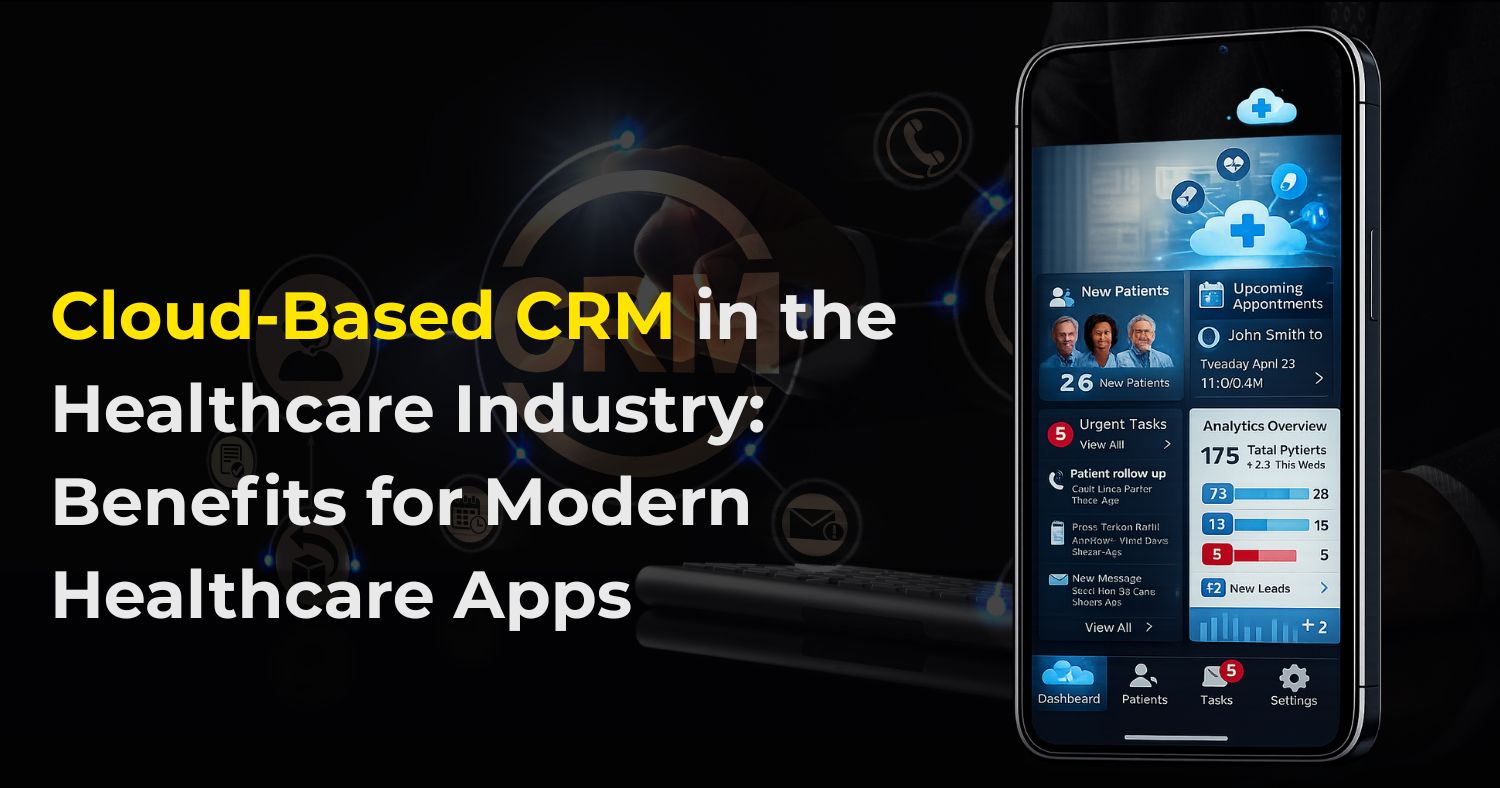
In today’s digital age, CRM in the healthcare industry has become a vital tool for hospitals, clinics, and healthcare providers aiming to improve patient care and streamline operations. By leveraging cloud-based CRM, healthcare organizations can manage patient data securely, automate workflows, and deliver personalized services efficiently.
With mobile app integration, cloud-based CRM helps providers engage patients proactively, send appointment reminders, track medical histories, and maintain compliance with healthcare regulations. It also enables staff to optimize daily operations, reduce administrative burdens, and make data-driven decisions that enhance overall care quality.
What is Cloud-Based CRM in Healthcare?
A Customer Relationship Management (CRM) system is a software platform designed to manage interactions between an organization and its customers. In the healthcare context, CRM in the healthcare industry focuses on managing patient relationships, streamlining communication, and improving service delivery.
Cloud-based CRM is hosted on cloud servers instead of on-premise systems. This means healthcare providers can access patient data, analytics, and workflows from anywhere, on any device, without heavy IT infrastructure.
For a deeper understanding of implementing such solutions, read our Ultimate Guide to Healthcare CRM Software Development.
Difference Between Traditional and Cloud-Based CRM
| Feature | Traditional CRM | Cloud-Based CRM |
| Hosting | On-premise servers | Cloud servers |
| Accessibility | Limited to the office | Access anywhere, anytime |
| Cost | High upfront infrastructure cost | Subscription-based, lower initial cost |
| Maintenance | Handled internally | Managed by the provider |
| Scalability | Limited | Easily scalable |
Cloud-based CRM is particularly suited for healthcare because it allows secure data sharing between clinics, hospitals, and telemedicine platforms while supporting patient engagement on mobile devices.
Key Features of Cloud-Based CRM for Healthcare Apps
Modern healthcare apps rely on cloud-based CRM to deliver efficient services. The key features include:
- Patient Management and Appointment Scheduling: Streamlined registration, appointment booking, and scheduling for multiple departments.
- Secure Patient Data Storage: Encrypted storage for sensitive medical records, complying with HIPAA and other regulations.
- Automated Reminders and Notifications: Automatic reminders for appointments, prescriptions, and follow-ups.
- Analytics and Reporting: Insights into patient behavior, appointment trends, and operational efficiency.
- Integration with Telemedicine and IoT Devices: Seamless integration with wearable devices, remote monitoring systems, and telehealth platforms.
- Multi-Channel Communication: SMS, email, and in-app messaging to maintain consistent communication with patients.
By leveraging these features, healthcare providers can deliver personalized care, improve engagement, and optimize internal processes. CRM in the healthcare industry ensures that patient data is always accessible, secure, and actionable.
Benefits of Cloud-Based CRM in Healthcare
Cloud-based CRM systems bring multiple advantages to healthcare organizations and mobile app users.
Improved Patient Experience
- Personalized care plans based on patient history.
- Easy appointment booking and reminders.
- Access to medical records and test results on mobile apps.
Operational Efficiency
- Streamlined workflows reduce administrative burden.
- Automated appointment scheduling minimizes errors.
- Staff can focus on patient care rather than paperwork.
Data Security and Compliance
- HIPAA-compliant cloud solutions protect sensitive patient data.
- Encrypted communication and secure access prevent unauthorized use.
Scalability
- Easily expand services to multiple clinics or mobile units.
- Handle increasing patient load without additional infrastructure.
Cost Savings
- Cloud subscription models reduce upfront IT costs.
- Less reliance on physical servers and maintenance teams.
Better Decision-Making
- Real-time dashboards and analytics provide insights into patient trends.
- Identify high-demand services and optimize resource allocation.
For startups exploring healthcare business ideas, these benefits make cloud-based CRM a crucial foundation for scalable, patient-focused services.
How Healthcare Apps Leverage Cloud-Based CRM
Cloud-based CRM integration in healthcare apps provides a wide range of functionalities that streamline operations and improve patient care.
- Telehealth Integration: Patients can schedule, manage, and attend virtual consultations directly through healthcare apps, with all interactions automatically recorded in the CRM. This ensures that patient histories are up-to-date and accessible to healthcare providers in real time.
- Chronic Disease Management: Healthcare apps can track patient health metrics such as blood pressure, glucose levels, and heart rate, storing the data in the CRM. Providers can use this information to identify early warning signs and deliver timely interventions, improving outcomes for chronic disease patients.
- Patient Engagement: CRMs enable personalized communication through mobile apps, including notifications for appointments, reminders for medications, and wellness tips. This consistent engagement helps patients stay proactive about their health and encourages adherence to treatment plans.
- Feedback and Surveys: Healthcare apps can collect patient feedback and survey responses directly within the app. This data helps providers assess satisfaction, identify gaps in service, and implement improvements quickly.
By integrating cloud-based CRM into healthcare apps, providers can maintain continuity of care, enhance communication with patients, and streamline workflows for both administrative and clinical staff.
Choosing the Right Healthcare CRM for Your App
Selecting the right CRM solution is crucial for ensuring effectiveness and long-term success. Key factors to consider include:
- Security and Compliance: The CRM must be HIPAA-compliant and use encrypted storage to protect sensitive patient data.
- Scalability: Choose a system that can grow with your organization’s needs, supporting an increasing number of patients and additional functionalities over time.
- Integration: The CRM should easily connect with EHR systems, telehealth platforms, and mobile apps to allow seamless data exchange across different tools.
- Usability: A simple and intuitive interface is essential so that staff and patients can navigate the system without difficulty.
- Support and Maintenance: Reliable vendor support is important for troubleshooting, regular updates, and ensuring the CRM operates efficiently.
Implementation Challenges and Solutions
Integrating cloud-based CRM into healthcare apps can offer tremendous benefits, but it also comes with several challenges. With proper planning and execution, these obstacles can be overcome to ensure a smooth implementation.
Data Migration
Transferring patient records from legacy systems or paper-based records to a cloud-based CRM can be complicated. Without proper validation, there’s a risk of incomplete or inaccurate data.
- Solution: Use a phased migration approach, moving small batches of data at a time, and verify accuracy after each stage. Automated data validation tools can help prevent errors.
Staff Training
Healthcare staff may find it challenging to adopt new CRM systems due to unfamiliar interfaces or complex workflows.
- Solution: Conduct hands-on training sessions, provide easy-to-follow user manuals, and create tutorial videos. Ongoing support ensures staff can efficiently use the system.
Integration with Existing Systems
A CRM system must work seamlessly with Electronic Health Records (EHR), telemedicine platforms, billing systems, and other healthcare software. Poor integration can result in data silos and workflow disruptions.
- Solution: Partner with experienced healthcare app development services to ensure smooth API integrations and consistent data flow across platforms.
Ensuring Compliance
Healthcare data is highly sensitive, and organizations must comply with regulations such as HIPAA, GDPR, or regional healthcare laws. Non-compliance can lead to fines and reputational damage.
- Solution: Implement security measures such as encryption, secure authentication, and access controls. Regular audits and automated compliance checks can help maintain regulatory standards.
Change Management
Adopting a new CRM system requires organizational change. Resistance from staff or a lack of user adoption can reduce the system’s effectiveness.
- Solution: Communicate the benefits of the new system clearly, involve staff in the planning process, and gather feedback during implementation to improve usability.
Professional healthcare app development teams can mitigate these challenges by planning implementation in stages, testing integrations thoroughly, providing comprehensive staff training, and maintaining ongoing support.
Future Trends of Cloud-Based CRM in Healthcare
Cloud-based CRM technology is continuously evolving, and future innovations will further improve patient care and operational efficiency. Healthcare organizations that adopt these trends can stay ahead of the competition.
- Artificial Intelligence (AI) and Predictive Analytics: AI algorithms can analyze patient data to identify high-risk patients, forecast appointment demand, and suggest personalized interventions. Predictive analytics can help reduce hospital readmissions and optimize resource allocation.
- Remote Patient Monitoring (RPM): Integration with IoT devices such as wearable fitness trackers, smart glucose monitors, or blood pressure sensors allows real-time tracking of patient health metrics. RPM enables early detection of complications and supports proactive care management.
- Voice-Enabled CRM: Healthcare staff can enter or retrieve patient data through voice commands, reducing manual entry and speeding up workflows. Voice-enabled CRMs improve efficiency in busy clinics or hospitals and make documentation less time-consuming.
- Personalized Medicine: CRM systems can leverage collected patient data to develop customized care plans. By analyzing medical history, lifestyle information, and genetic data, providers can deliver tailored treatments and recommendations for better outcomes.
- Enhanced Patient Engagement: Future CRMs will include AI-driven chatbots, in-app messaging, and automated follow-ups to improve communication with patients. Engagement features help patients stay informed about their care plans, follow-up appointments, and preventive health measures.
- Integration with Emerging Technologies: Cloud-based CRMs will increasingly integrate with telemedicine, augmented reality (AR) for surgical planning, and blockchain for secure medical records. These integrations will create a more connected and secure healthcare ecosystem.
By adopting these trends, healthcare apps can remain modern, patient-focused, and competitive, delivering higher-quality care while optimizing operational efficiency and reducing administrative burdens.
Conclusion
CRM in the healthcare industry is revolutionizing patient engagement, operational efficiency, and data-driven decision-making. Integrating cloud-based CRM into mobile apps enhances patient experience, streamlines workflows, and ensures compliance with healthcare standards.
Healthcare organizations seeking to modernize their operations and deliver superior patient care should consider partnering with a healthcare mobile app development company to leverage the full potential of cloud-based CRM solutions.
Frequently Asked Questions
Related Posts
23 Sep 2025
How To Build Social Media App with Next Gen AI Power
The social media space is a crowded attention marketplace, with many platforms targeting user engagement. Building a new social app in this ecosystem ..
Matthew Connor
4 Mar 2025
Ultimate Guide to Building an AI App Step-by-Step
Artificial Intelligence (AI) is revolutionizing the world by making technology more efficient and companies more productive. From robotics that can pe..
Matthew Connor
Join the newsletter and get all the updates.
Subscribe
 +1 (443) 454-3676
 sales@whitehalltechnologies.com
 501 East Las Olas Blvd., Suite 200 and 300, Fort
Lauderdale, Florida, FL 33301
501 East Las Olas Blvd., Suite 200 and 300, Fort
Lauderdale, Florida, FL 33301


