29 Jan 2026
Updated on February 16th, 2026
Cost To Develop a Human Capital Management Software

Matthew Connor




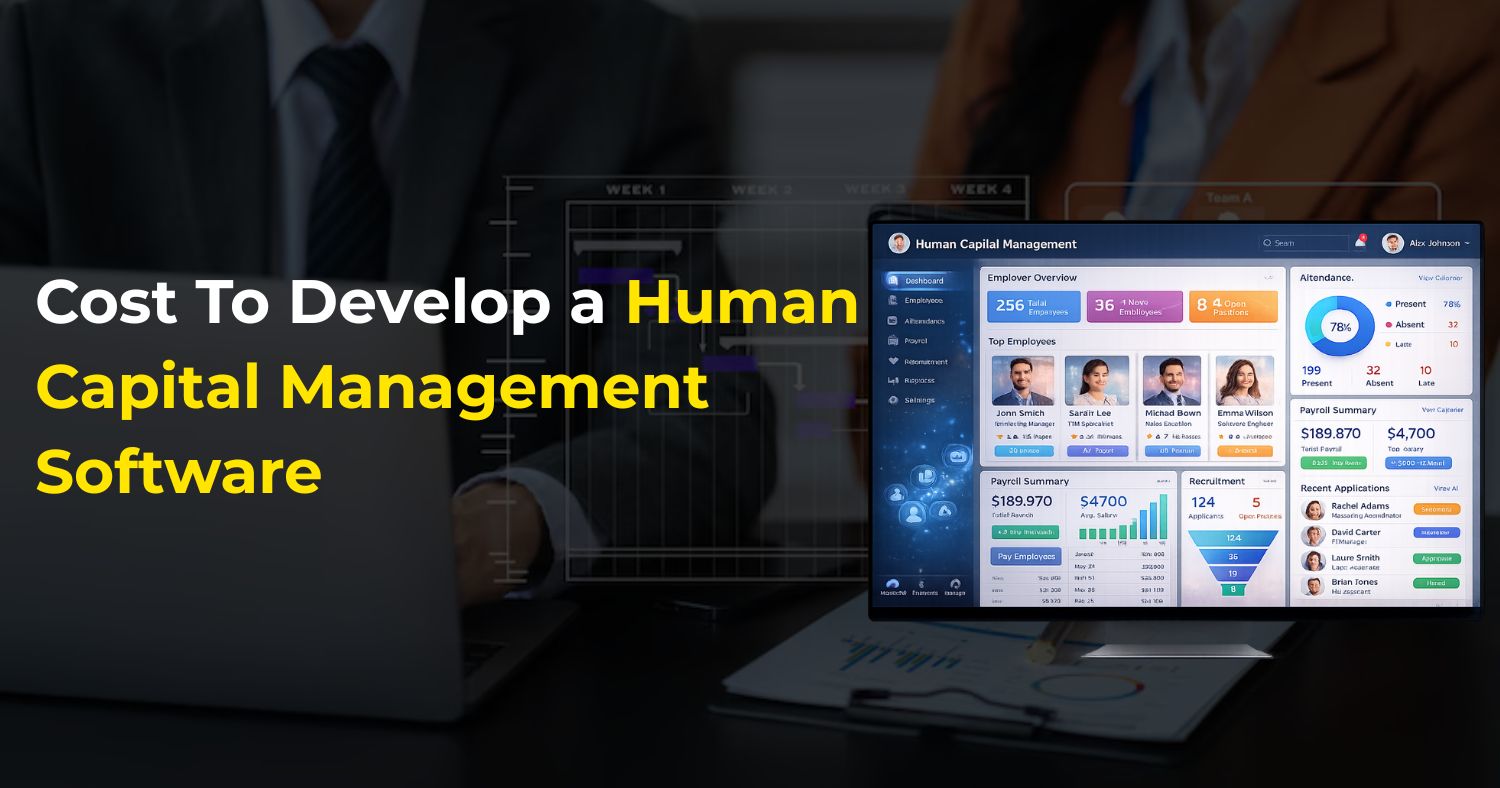
The cost to develop a human capital management software depends on features, platform, integrations, and complexity. Businesses looking to streamline HR processes, employee management, payroll, and performance tracking want to understand the investment required before starting development. Early budgeting ensures the software aligns with organizational goals and ROI expectations.
Human Capital Management (HCM) software automates critical HR functions, including recruitment, onboarding, attendance tracking, payroll management, performance evaluations, and employee self-service. Development costs vary based on customization, cloud integration, mobile accessibility, and analytics capabilities. Additionally, choosing between web-based solutions, mobile applications, or a hybrid approach can significantly impact the overall budget.
Investing in well-planned HCM software not only reduces manual HR workloads but also enhances employee productivity and organizational efficiency. By understanding cost factors upfront, businesses can make informed decisions and prioritize features for a scalable, future-ready solution.
What Is Human Capital Management Software?
Human Capital Management (HCM) software is a digital solution that helps organizations manage their workforce efficiently. It centralizes HR functions such as recruitment, onboarding, payroll, attendance, performance management, and employee data. By automating routine HR tasks and providing data-driven insights, HCM software improves productivity, ensures compliance, and supports better decision-making across the entire employee lifecycle.
What is the Cost Of Human Capital Management Software
| Module | Complexity | Estimated Cost |
| Employee Database Management | Medium | $5,000–$10,000 |
| Payroll & Compensation | High | $10,000–$20,000 |
| Recruitment & ATS | Medium | $7,000–$15,000 |
| Performance Management | Medium | $5,000–$12,000 |
| Learning Management System | High | $8,000–$18,000 |
| Attendance & Leave | Medium | $4,000–$10,000 |
| Reporting & Analytics | Medium | $5,000–$12,000 |
| Mobile Apps (iOS & Android) | High | $15,000–$35,000 |
Total Estimated Cost: $60,000–$150,000+, depending on features, integrations, and customization.
Factors Affecting the Cost to Develop HCM Software
The cost to develop an HCM software varies based on features, complexity, technology stack, and development approach. Let’s explore key factors:
Platform Selection
The platform you choose plays a major role in development cost, performance, and user experience.
- Web-Based Platform: Web-based HCM software is accessible through browsers on desktops, tablets, and mobile devices. It is commonly used by mid-sized and large organizations due to easy deployment, centralized updates, and lower maintenance costs. Web platforms are ideal for HR teams and administrators managing large employee databases.
- Mobile Applications (iOS & Android): Mobile HCM apps allow employees to access HR services anytime, anywhere. Features like leave requests, attendance tracking, payslip access, and notifications improve engagement. However, building native apps for both iOS and Android increases development time and cost due to separate codebases.
- Hybrid Solutions: Hybrid HCM solutions combine web platforms with mobile applications to deliver complete accessibility. While this option offers the best user experience for both HR teams and employees, it requires more development effort, integrations, and testing, which increases overall cost.
Choosing the right platform not only affects the development budget but also impacts employee adoption, usability, and long-term scalability of the HCM system.
Key Features and Modules
HCM software consists of multiple modules. Adding more modules increases development complexity:
- Employee Database Management
- Payroll & Compensation
- Recruitment & Applicant Tracking System (ATS)
- Performance Appraisal & Talent Management
- Learning Management System (LMS)
- Attendance & Leave Management
- Compliance & Reporting
Each module requires backend logic, database management, and user interface design, impacting development cost.
Technology Stack
The technology used affects scalability, security, and cost:
- Frontend: React.js, Angular, Vue.js
- Backend: Node.js, Java, Python, .NET
- Database: MySQL, PostgreSQL, MongoDB
- Cloud Services: AWS, Azure, Google Cloud
- Mobile App Development: Swift (iOS), Kotlin/Java (Android), or cross-platform frameworks like Flutter
A robust technology stack ensures performance but increases initial investment.
Customization vs. Off-the-Shelf
- Custom HCM Software: Tailored to business requirements; flexible and scalable; higher cost.
- Off-the-Shelf HCM: Ready-made solution; lower cost but may lack flexibility and integration capabilities.
Custom software allows integration with existing ERP systems, payroll solutions, and third-party applications.
Integration Capabilities
HCM software often needs integration with:
- Payroll and accounting software
- Attendance devices or biometric systems
- Communication tools like Slack or Microsoft Teams
- Third-party learning platforms
Integration complexity directly impacts the cost to develop an HCM software.
Security and Compliance
- Protecting employee data is critical
- Implementing GDPR, HIPAA, or local labor law compliance adds cost
- Role-based access, encryption, and audit logs are essential features
Security features are non-negotiable for enterprise-grade HCM systems.
Maintenance and Updates
- Regular bug fixes, feature updates, and OS compatibility
- Cloud hosting and server management
- Scalability for adding more users over time
Read more: ERP Software Development is a Smart Investment for Growing Businesses looking to scale operations with connected enterprise solutions.
Step-By-Step Development Process for HCM Software
Step 1: Requirement Gathering
- Understand organizational needs
- Identify key modules and integrations
- Define target users and access levels
Step 2: Design and Prototyping
- Create wireframes and user flows
- Design intuitive UI/UX for web and mobile
- Focus on employee self-service and admin dashboards
Step 3: Backend Development
- Database design and server-side logic
- API creation for integrations
- Role-based access and security implementation
Step 4: Frontend Development
- Develop web portals for HR admins and employees
- Mobile apps for iOS and Android (optional)
- Interactive dashboards and reports
Step 5: AI & Analytics Integration
- Predictive analytics for workforce planning
- Performance tracking and attrition analysis
- Reports for management decision-making
Step 6: Testing & Quality Assurance
- Functional testing, usability testing, and security audits
- Bug fixes and performance optimization
Step 7: Deployment
- Cloud or on-premises deployment
- Mobile apps on App Store/Google Play
- Employee onboarding and training
Step 8: Maintenance & Support
- Regular updates and server maintenance
- Customer support and troubleshooting
Benefits of Custom HCM Software
Custom HCM software is designed specifically for your business needs, making it more effective than generic solutions.
- Centralized HR management: All employee data, payroll details, attendance records, and performance reports are stored in one system, reducing confusion and saving time.
- Improved compliance and reduced errors: Automation minimizes manual mistakes and helps organizations stay compliant with labor laws and internal policies.
- Better employee engagement and satisfaction: Self-service portals allow employees to access payslips, apply for leave, and update personal details easily, improving transparency and trust.
- Real-time analytics for better decisions: Custom dashboards provide clear insights into workforce performance, attendance trends, and resource planning, helping leaders make informed decisions.
- Scalable solutions for organizational growth: Custom HCM software grows with your business. New users, features, and integrations can be added without disrupting operations.
Custom HCM software tailored to your business goals delivers long-term value, improves efficiency, and offers a higher return on investment compared to off-the-shelf solutions.
How to Reduce HCM Software Development Costs
Developing HCM software does not have to be expensive if planned correctly. Smart decisions at the early stages can significantly reduce development and long-term costs.
- Start with an MVP focusing on core HR modules: Instead of building a full system at once, begin with a Minimum Viable Product (MVP). Focus on essential features such as employee records, attendance, and payroll. This approach helps test the software, gather user feedback, and avoid spending money on unused features.
- Use cross-platform frameworks: Cross-platform technologies allow one codebase to work on both Android and iOS. This reduces development time, lowers costs, and simplifies future updates while still offering a smooth user experience.
- Outsource to experienced development teams: Working with skilled development teams helps avoid errors, rework, and delays. Experienced developers understand best practices, security needs, and scalable design, which saves cost in the long run.
- Add advanced features gradually: Not every feature is needed on day one. Start with high-priority modules and add advanced tools like AI analytics, performance insights, or learning systems later as business needs grow.
- Use cloud infrastructure to lower costs: Cloud platforms remove the need for expensive servers and maintenance. They offer flexible pricing, easy scaling, regular backups, and strong security, making them a cost-effective option.
Read our guide on: How Much Does It Cost to Hire Software Developers
Why Partner With Expert Developers
Partnering with an experienced mobile app development company like Whitehall Technologies helps businesses build Human Capital Management software efficiently and with confidence.
Expert developers provide strategic guidance throughout the development process, cost-effectively manage projects, and ensure smooth integration with existing ERP systems. They also follow strict security standards and privacy regulations, reducing risks and delivering a reliable, scalable HCM solution tailored to business needs.
Conclusion
The cost to develop a Human Capital Management software depends on many factors, including features, platform choice, integrations, security needs, and level of customization. There is no one-size-fits-all price, but businesses that plan their requirements carefully can control costs and achieve strong long-term value.
A well-designed HCM system helps organizations manage employees more efficiently by automating HR tasks such as recruitment, payroll, attendance, and performance tracking. It reduces manual work, improves accuracy, ensures legal compliance, and supports better decision-making through real-time data and analytics.
Frequently Asked Questions
Related Posts

23 Sep 2025
How To Build Social Media App with Next Gen AI Power
The social media space is a crowded attention marketplace, with many platforms targeting user engagement. Building a new social app in this ecosystem ..
Matthew Connor
4 Mar 2025
Ultimate Guide to Building an AI App Step-by-Step
Artificial Intelligence (AI) is revolutionizing the world by making technology more efficient and companies more productive. From robotics that can pe..
Matthew Connor
Join the newsletter and get all the updates.
Subscribe
 +1 (443) 454-3676
 sales@whitehalltechnologies.com
 501 East Las Olas Blvd., Suite 200 and 300, Fort
Lauderdale, Florida, FL 33301
501 East Las Olas Blvd., Suite 200 and 300, Fort
Lauderdale, Florida, FL 33301


