30 Jan 2026
Updated on February 2nd, 2026
Cost To Develop a Route Planning App Like Komoot

Matthew Connor




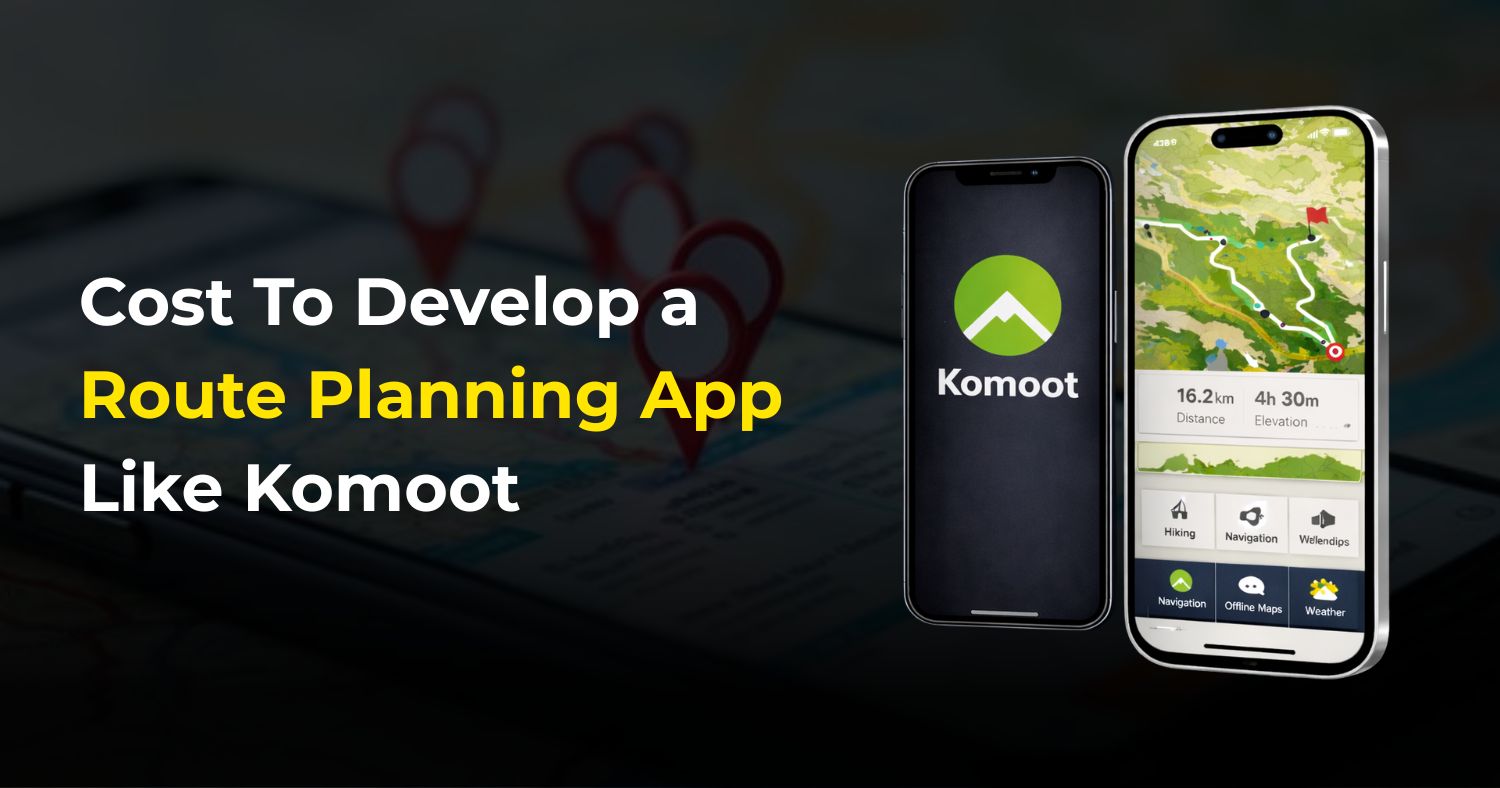
Planning to develop a route planning app like Komoot? The cost typically ranges from $50,000 to $200,000, depending on features, platform, and complexity. Knowing this upfront helps you budget effectively and make informed decisions before starting development.
Route planning apps are increasingly popular as users seek accurate navigation, personalized routes, and adventure tracking. Features like interactive maps, offline navigation, real-time updates, and fitness tracking make these apps essential for hikers, cyclists, and travelers. Advanced apps with AI-powered route recommendations, social sharing, and community features naturally increase development costs.
Understanding Route Planning Apps
A route planning app is a mobile application that helps users plan, navigate, and track their journeys efficiently, especially for outdoor activities like hiking, cycling, trekking, or running. Unlike standard GPS apps that primarily provide directions, route planning apps offer specialized navigation features tailored for adventure enthusiasts.
Key functionalities include
- Detailed Maps for Outdoor Activities: Access interactive maps specifically designed for hiking trails, cycling paths, and trekking routes. Users can view terrain types, elevation, and points of interest to plan their journey effectively.
- Suggested Routes Based on Difficulty, Distance, and Terrain: Apps provide smart route recommendations depending on user preferences, fitness levels, and activity type, making it easier for beginners and experts alike.
- Offline Navigation: Travelers can download maps and routes for areas with poor or no internet connectivity, ensuring uninterrupted guidance during trips.
- Real-Time Tracking and Progress Monitoring: Users can track their location, distance covered, estimated time, and even share their progress with friends or the app community.
- Weather and Safety Alerts: Many apps integrate weather updates and hazard alerts to help users plan safer trips.
Popular Examples of Route Planning Apps
- Komoot: Focused on hiking, cycling, and trekking, Komoot provides detailed trail maps, community reviews, and personalized route suggestions based on difficulty and distance.
- AllTrails: Offers an extensive collection of trail maps, reviews, and offline navigation for hikers, runners, and bikers, with the ability to track routes and share experiences.
- Strava: While primarily used by athletes, Strava allows users to plan routes, track cycling and running activities, analyze performance, and engage with a social fitness community.
- Gaia GPS: Provides topographic maps, detailed trail info, and offline navigation, popular among serious hikers and backpackers.
- Ride with GPS: Specializes in cycling routes, offering route creation, navigation, and community-shared paths for cyclists worldwide.
Estimated Cost Breakdown
The cost to develop a route planning app depends on features, platform, and complexity. Here’s an approximate breakdown:
| Feature/Module | Time (hours) | Cost (USD) |
| User Registration/Login | 60-80 | 1,500-2,000 |
| Interactive Maps | 200-250 | 5,000-6,000 |
| Route Planning & Creation | 150-200 | 4,000-5,000 |
| Offline Maps | 100-150 | 2,500-3,500 |
| Community Sharing & Social | 80-120 | 2,000-3,000 |
| Notifications & Alerts | 40-60 | 1,000-1,500 |
| Payment Gateway Integration | 60-80 | 1,500-2,000 |
| Admin Panel | 200-250 | 5,000-6,000 |
| QA & Testing | 100-150 | 2,500-3,500 |
MVP vs Full-Fledged App
- MVP (Minimum Viable Product): $30,000 – $50,000
- Full-Fledged App Like Komoot: $70,000 – $120,000+
Costs vary depending on location, technology stack, and development company. Partnering with a Travel app Development company like Whitehall Technologies can optimize costs and efficiency.
Key Features of a Route Planning App Like Komoot
Developing a route planning app requires integrating various features for both users and administrators. Here’s a detailed breakdown:
User App Features
- User Registration and Login: The first step for any user is creating an account or logging in. A robust route planning app should offer multiple login options, including email, phone number, or social media accounts. This ensures secure authentication, personalized user experiences, and the ability to track activity and preferences over time.
- Personalized Dashboard: Once logged in, users access a dashboard that consolidates all essential information. The dashboard allows users to view saved routes, track progress on ongoing trips, and plan future adventures. It provides a quick overview of distances covered, estimated time for upcoming routes, and other key metrics, helping users manage their outdoor activities effectively.
- Interactive Maps: Interactive maps are the core of any route planning app. These maps provide real-time navigation and detailed trail information, including elevation, terrain type, and points of interest. Users can zoom in and out, highlight their paths, and view alternative routes. Integration with mapping APIs such as Google Maps or OpenStreetMap ensures accuracy and reliability for navigation.
- Offline Maps: Many outdoor activities take place in areas with limited or no internet connectivity. Offline maps allow users to download trail information in advance so they can navigate without interruption. This feature ensures that users can continue their adventures even in remote locations while conserving mobile data.
- Route Creation and Customization: A significant feature of apps like Komoot is the ability for users to create and customize routes. Users can select paths based on difficulty, estimated time, distance, and terrain type. Waypoints, rest stops, and scenic locations can be added to enhance the journey. Custom routes can also be saved for future use or shared with the community.
- Community Sharing: Community engagement is a vital aspect of modern route planning apps. Users can share their experiences, photos, reviews, and completed routes with other travelers. This encourages interaction, creates a sense of adventure community, and helps users discover new trails through recommendations from fellow explorers.
- Notifications & Alerts: Timely notifications are essential for safety and convenience. Users receive alerts about weather changes, trail closures, hazards, or updates to their saved routes. These alerts help travelers plan better and avoid unexpected obstacles, enhancing the overall safety and reliability of the app.
- In-App Purchases: Many apps monetize through premium features and content. In-app purchases allow users to access exclusive maps, advanced navigation features, offline trail packages, or expert guides. Subscription models or one-time payments provide additional revenue streams while offering enhanced experiences to users.
- Multi-Language Support: To cater to a global audience, multi-language support is essential. Users can navigate the app in their preferred language, improving accessibility and overall usability. This feature broadens the app’s reach and ensures travelers from different regions can fully enjoy its functionalities.
Admin Panel Features
- User Management: Effective user management is a crucial component of any route planning app. Administrators can monitor user activity, approve or reject submissions, and manage accounts to maintain a safe and engaging community. This feature allows admins to ensure that only authentic and relevant content is shared, and it helps in moderating the platform to prevent misuse or spam.
- Route Management: Admins have complete control over the routes available in the app. They can add new trails, edit existing ones, or remove outdated or unsafe routes. This ensures that users always have access to accurate and up-to-date information. Administrators can also verify community-submitted routes before making them public, maintaining the quality and reliability of the app’s navigation features.
- Analytics Dashboard: The analytics dashboard provides valuable insights into how users interact with the app. Admins can track metrics such as popular trails, active users, route completion rates, and engagement with community features. This data helps in making informed decisions to improve app functionality, enhance user experience, and plan future updates or features effectively.
- Push Notifications Management: Administrators can send targeted alerts or updates to users through the push notifications management feature. This can include notifications about new routes, app updates, promotional offers, safety alerts, or weather warnings. It allows admins to communicate efficiently with the user base and keep them engaged and informed at all times.
- Payment Management: Payment management ensures that all in-app purchases, subscriptions, and transactions are tracked accurately. Admins can monitor payments, generate financial reports, and manage subscriptions seamlessly. Integrating secure payment gateways ensures smooth and safe transactions, enhancing user trust and providing a reliable revenue model for the app.
Factors Affecting the Cost of App Development
The cost to develop a route planning app like Komoot is influenced by several factors. Understanding these variables helps businesses plan their budget and make informed decisions about features, design, and technology.
- App Complexity: The complexity of the app is one of the most significant factors affecting development costs. A simple route planning app with basic navigation and limited features will cost considerably less than a feature-rich platform like Komoot, which includes offline maps, community sharing, advanced route customization, notifications, and in-app purchases. More complex apps require additional development time, testing, and maintenance, increasing the overall investment.
- Platform Choice: Choosing the right platform has a direct impact on cost. Developing an app for a single platform, such as iOS or Android, is generally more affordable than building a cross-platform solution. Cross-platform development allows the app to run on multiple operating systems simultaneously but may require additional development resources to ensure seamless performance across devices.
- Design Requirements: The design of a route planning app is critical for user experience. Basic UI designs with simple navigation are more cost-effective, whereas advanced designs featuring interactive maps, animations, customizable dashboards, and gamification elements demand more time and expertise. A well-designed app not only improves usability but also increases engagement, making design a worthwhile investment.
- Technology Stack: The choice of technology stack affects both cost and performance. Native development (Swift for iOS, Kotlin for Android) typically delivers better performance but is more expensive due to separate development for each platform. Hybrid frameworks like React Native or Flutter allow developers to build apps for multiple platforms simultaneously, reducing costs but sometimes compromising slightly on performance for complex features like interactive maps.
- Third-Party Integrations: Route planning apps rely heavily on external services such as GPS, map APIs, weather APIs, and social media integration. Integrating these services adds functionality but also increases development complexity and cost. For example, integrating Google Maps or OpenStreetMap APIs ensures accurate navigation, while weather APIs enhance user safety by providing real-time alerts.
- Team Location: Hiring a top-rated mobile app development company may cost more, but it ensures quality. While hiring offshore developers can reduce costs, it’s important to ensure that the team has experience in travel app development, understands your requirements, and maintains quality standards.
- Maintenance and Updates: Even after initial development, ongoing maintenance and updates add to the total cost. Regular updates to maps, route data, app features, and operating system compatibility are essential to keep the app functional and competitive.
- Market-Specific Requirements: Some apps may need customization based on the target market, such as multi-language support, local mapping services, or region-specific route recommendations. Incorporating these features increases the complexity and, consequently, the cost of development.
By carefully evaluating these factors and partnering with a top-rated mobile app development company like Whitehall Technologies, businesses can plan their budget effectively and launch a scalable, feature-rich app.
Conclusion
Developing a route planning app like Komoot is both a challenging and rewarding endeavor. The overall cost depends on various factors such as app complexity, platform choice, design requirements, technology stack, third-party integrations, and the location of your development team. While an MVP can be launched for $30,000 – $50,000, a full-featured, robust app with interactive maps, offline navigation, route customization, and community features can cost $70,000 – $120,000 or more.
Frequently Asked Questions
Related Posts

23 Sep 2025
How To Build Social Media App with Next Gen AI Power
The social media space is a crowded attention marketplace, with many platforms targeting user engagement. Building a new social app in this ecosystem ..
Matthew Connor

4 Mar 2025
Ultimate Guide to Building an AI App Step-by-Step
Artificial Intelligence (AI) is revolutionizing the world by making technology more efficient and companies more productive. From robotics that can pe..
Matthew Connor
Join the newsletter and get all the updates.
Subscribe
 +1 (443) 454-3676
 sales@whitehalltechnologies.com
 501 East Las Olas Blvd., Suite 200 and 300, Fort
Lauderdale, Florida, FL 33301
501 East Las Olas Blvd., Suite 200 and 300, Fort
Lauderdale, Florida, FL 33301


