9 Feb 2026
Updated on February 20th, 2026
Food Delivery App Development Cost in USA: A Complete Guide for Startups

Matthew Connor




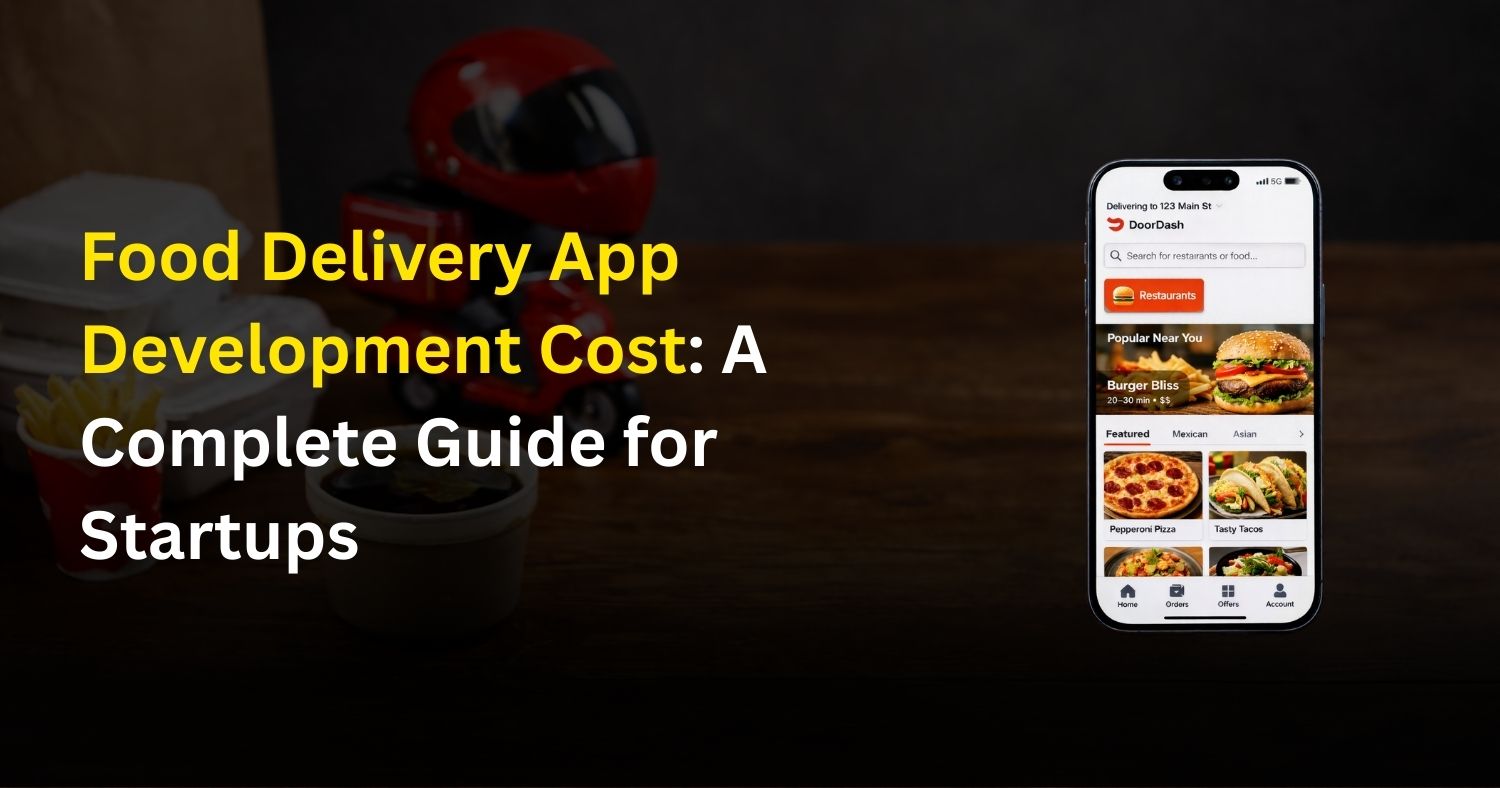
Food delivery app development cost in USA usually ranges from $25,000 to $250,000+. A basic MVP costs around $25,000–$50,000, while an advanced app like DoorDash with real-time tracking, AI features, and scalability can cost $150,000–$250,000 or more, depending on features, platforms, and development location.
This guide is written for startup founders, entrepreneurs, and product managers who want real numbers, clear breakdowns, and practical advice. We cover how to make an app like DoorDash, the cost to develop an app like DoorDash, feature-wise pricing, country-wise development costs, monetization models, and how AI is changing the food delivery space. By the end, you will have a complete roadmap to plan your budget and build a profitable food delivery app.
Feature-Wise Cost Breakdown
The total cost of a food delivery app depends on the features built for each user role. Every module adds development time and effort, which directly impacts the final budget.
Customer App Features
The customer app allows users to browse restaurants, place orders, and track deliveries. Features like user registration and login help manage profiles, while restaurant search and menu browsing improve discovery. Cart and checkout ensure smooth order placement, and payment gateway integration enables secure transactions. Order tracking keeps users updated in real time, and reviews and ratings build trust and engagement.
Estimated Cost: $15,000 – $40,000
Restaurant Panel Features
The restaurant panel helps restaurant owners manage daily operations. Profile management allows updating business details, while menu management makes it easy to add or change items. Order management helps accept, reject, and prepare orders efficiently. The earnings dashboard gives clear insights into revenue and payouts.
Estimated Cost: $10,000 – $30,000
Delivery Partner App
The delivery partner app supports drivers in handling deliveries smoothly. Login and verification ensure secure access, while order alerts notify drivers instantly. Navigation and maps help find the fastest routes, and earnings tracking shows completed deliveries and payments.
Estimated Cost: $10,000 – $25,000
Admin Panel
The admin panel gives full control over the entire platform. User management handles customers, restaurants, and drivers. Commission setup allows managing platform revenue, while analytics and reports provide performance insights. Content management helps control banners, offers, and app content.
Estimated Cost: $15,000 – $35,000
UI/UX Design Cost
Good UI and UX design improve user experience, increase conversions, and boost retention. A basic UI design focuses on simple layouts and standard components, while custom UX includes user research, wireframes, and advanced interactions.
Basic UI Cost: $5,000 – $8,000
Custom UX with Research Cost: $10,000 – $20,000
Why Food Delivery App Development Cost Varies So Much
Food delivery app development cost in USA varies because every app has different features, design needs, and technical requirements. No two apps are priced the same, as the cost depends on several development factors.
- Number of Features: Apps with basic ordering and payment features cost less, while advanced features like live tracking, offers, and analytics increase development time and cost.
- Platforms (iOS, Android, Web): Building apps for multiple platforms increases development effort. Adding iOS, Android, and web versions requires more time and a higher budget.
- UI/UX Design Complexity: Simple and clean designs are more affordable, while custom layouts, animations, and interactive elements raise design and development costs.
- Backend Architecture: A basic backend costs less, but scalable and secure backend systems that handle real-time data and high traffic increase overall expenses.
- Third-Party Integrations: Integrating payment gateways, maps, notifications, and analytics adds extra development and maintenance costs to the project.
- Development Location: Development costs vary by region. For example, food delivery app development in the USA is more expensive compared to Asia or Eastern Europe due to higher hourly rates and compliance needs.
- Team Size and Experience: Experienced and larger teams charge more but deliver faster and better-quality results, while smaller teams may cost less but take more time.
Market Overview and Opportunity for Startups
The global online food delivery market is growing fast. Startups still have opportunities in:
- Cloud kitchens
- Local food delivery
- Healthy meals
- Subscription-based food apps
- Hyperlocal delivery
Why Startups Are Investing
- High user demand
- Repeat orders
- Multiple revenue streams
- Easy scalability
Types of Food Delivery Apps
Food delivery apps work in different ways based on how food is prepared, delivered, and managed. Choosing the right model is important because it directly affects features, operations, and the overall food delivery app development cost in USA.
Restaurant-to-Customer Model
In this model, restaurants handle their own food delivery.
- Restaurants receive orders through the app
- They use their own staff and vehicles for delivery
- The app mainly acts as an order management platform
This model has lower development and operational costs but limited control over delivery speed and service quality.
Platform-to-Customer Model (Like DoorDash)
This is the most advanced and popular model.
- The platform manages delivery using its own drivers
- Real-time order tracking and driver assignment are included
- Customers get faster and more reliable delivery
This model requires more features, logistics support, and higher investment, which increases the development cost.
Aggregator Model
The aggregator model connects restaurants and delivery partners on one platform.
- Restaurants focus only on food preparation
- Independent drivers accept and deliver orders
- The app manages matching, payments, and tracking
- This model offers flexibility and faster scaling but needs strong backend systems.
Each of these models affects the food delivery app development cost based on delivery management, real-time tracking, and app complexity.
How to Make an App Like DoorDash
Building an app like DoorDash needs proper planning, strong technology, and a higher budget. Since it follows the platform-to-customer model, it includes multiple user panels and advanced features.
Core Components
To build a complete food delivery app, you need the following main components:
- Customer Mobile App: Allows users to browse restaurants, place orders, track deliveries, and make payments.
- Restaurant Dashboard: Helps restaurants manage menus, accept or reject orders, and track payments.
- Delivery Partner App: Used by drivers to accept orders, navigate routes, and update delivery status.
- Admin Panel: Gives full control over users, orders, payments, commissions, and app performance.
Basic Process
Developing a food delivery app like DoorDash usually follows these steps:
- Market Research: Study competitors, target users, and local demand.
- Feature Planning: Decide on must-have and advanced features like live tracking, offers, and notifications.
- UI/UX Design: Create a simple and user-friendly design for smooth navigation.
- App Development: Build the app for Android, iOS, and backend systems.
- Testing: Check app performance, security, and user experience.
- Launch and Scaling: Release the app, gather feedback, and add new features as the user base grows.
Technology Stack Used in Food Delivery Apps
Choosing the right technology stack is important for building a fast, secure, and scalable food delivery app. The technology used affects app performance, development time, and overall cost.
- Frontend: The frontend controls how users interact with the app. Flutter and React Native are popular for cross-platform development, allowing one app to run on both Android and iOS. Swift is used for native iOS apps and offers smooth performance, while Kotlin is preferred for native Android apps due to its stability and speed.
- Backend: The backend manages app logic, user data, orders, and payments. Node.js is widely used for real-time features and fast performance. Laravel is known for its simplicity and strong security features, while Django is preferred for scalable and data-heavy applications.
- Database: Databases store user profiles, orders, menus, and transaction data. PostgreSQL is used for structured and reliable data storage, while MongoDB is suitable for flexible and high-volume data handling.
- Cloud & Hosting: Cloud platforms support app hosting, storage, and scaling. AWS provides reliable infrastructure and global reach, while Google Cloud offers strong data processing and performance tools. Cloud services help apps handle high traffic and ensure uptime.
Role of AI in Food Delivery Apps
AI in the food industry is playing an important role in improving speed, personalization, and overall efficiency. By using AI, food delivery apps can offer better user experience, faster deliveries, and smarter business decisions.
- Smart Recommendations: AI analyzes user behavior, order history, and preferences to suggest restaurants and dishes. This improves customer satisfaction and increases order value.
- Demand Forecasting: AI helps predict peak order times and popular food items. This allows platforms and restaurants to manage inventory, delivery partners, and pricing more efficiently.
- Route Optimization: AI finds the fastest and most efficient delivery routes based on traffic, distance, and weather conditions. This reduces delivery time and fuel costs.
- Chatbots: AI-powered chatbots handle customer support queries like order status, refunds, and complaints. This reduces support workload and improves response time.
- Fraud Detection: AI monitors transactions and user behavior to detect suspicious activities. This helps prevent fake orders, payment fraud, and misuse of promo codes.
- AI Features Cost: Adding AI features usually increases the development budget. Depending on complexity, AI integration can cost an extra $10,000 to $40,000, but it provides long-term value and better scalability.
Read more about: AI in Food Industry: Cost, Features, and Business Benefits
Monetization Models for Food Delivery Apps
Food delivery apps earn revenue through multiple income streams. Using a mix of these models helps apps increase profits while offering value to both restaurants and customers.
Commission from Restaurants
This is the most common way food delivery apps make money. Restaurants pay a commission on every order placed through the app.
- The commission usually ranges between 15% to 30% per order
- Higher visibility and access to more customers justify the commission
- Some apps charge different commission rates based on order volume or restaurant type
- This model benefits apps by providing consistent revenue as orders increase.
Delivery Fees
Delivery fees are charged directly to customers for doorstep delivery.
- Fees may depend on distance, order value, or peak hours
- Surge pricing is often applied during busy times or bad weather
- Customers may get free delivery on a minimum order value
- This model helps cover logistics and delivery partner costs.
Subscription Plans
Subscription plans offer special benefits to frequent users and restaurants.
- Customers pay a monthly or yearly fee for free or discounted delivery
- Restaurants can subscribe to lower commission rates or better app visibility
- Loyalty programs help increase repeat orders
- This model ensures a steady and predictable income.
Featured Listings
Restaurants pay to appear at the top of search results or on the home screen.
- Featured restaurants get higher visibility and more orders
- Pricing can be daily, weekly, or monthly
- Ideal for new or small restaurants wanting quick exposure
- This model works well in competitive food markets.
In-App Advertising
Food delivery apps sell ad space to restaurants and brands.
- Banner ads, pop-ups, and sponsored search results are common formats
- Brands promote special offers, new menu items, or events
- Ads are shown based on user location and preferences
- This model boosts revenue without increasing costs for users.
How Startups Can Reduce Development Cost
- Start with MVP: Launching with a minimum viable product helps startups reduce initial development costs. It focuses only on essential features, allowing faster launch and real user feedback before investing in advanced features.
- Use Cross-Platform Development: Cross-platform development allows startups to build one app for both Android and iOS. This reduces development time, lowers costs, and makes app maintenance easier.
- Outsource Smartly: Outsourcing to an experienced development team helps control costs and avoid mistakes. Choosing the right partner ensures quality work, clear communication, and faster project delivery.
- Focus on Core Features: Concentrating on core features keeps development simple and affordable. Advanced features can be added later as the app grows, helping startups manage their budget effectively.
Conclusion
Food Delivery App Development Cost in USA depends on features, technology, and development location. Startups should begin with an MVP, validate the market, and then scale. Building an app like DoorDash is expensive, but with smart planning, the investment can deliver long-term returns. Choosing the right food app development company and using AI wisely can help you stand out in a competitive market.
Frequently Asked Questions
Related Posts
23 Sep 2025
How To Build Social Media App with Next Gen AI Power
The social media space is a crowded attention marketplace, with many platforms targeting user engagement. Building a new social app in this ecosystem ..
Matthew Connor
4 Mar 2025
Ultimate Guide to Building an AI App Step-by-Step
Artificial Intelligence (AI) is revolutionizing the world by making technology more efficient and companies more productive. From robotics that can pe..
Matthew Connor
Join the newsletter and get all the updates.
Subscribe
 +1 (443) 454-3676
 sales@whitehalltechnologies.com
 501 East Las Olas Blvd., Suite 200 and 300, Fort
Lauderdale, Florida, FL 33301
501 East Las Olas Blvd., Suite 200 and 300, Fort
Lauderdale, Florida, FL 33301


