6 Feb 2026
HIPAA Compliant App Development in 2026: A Complete Guide

Matthew Connor




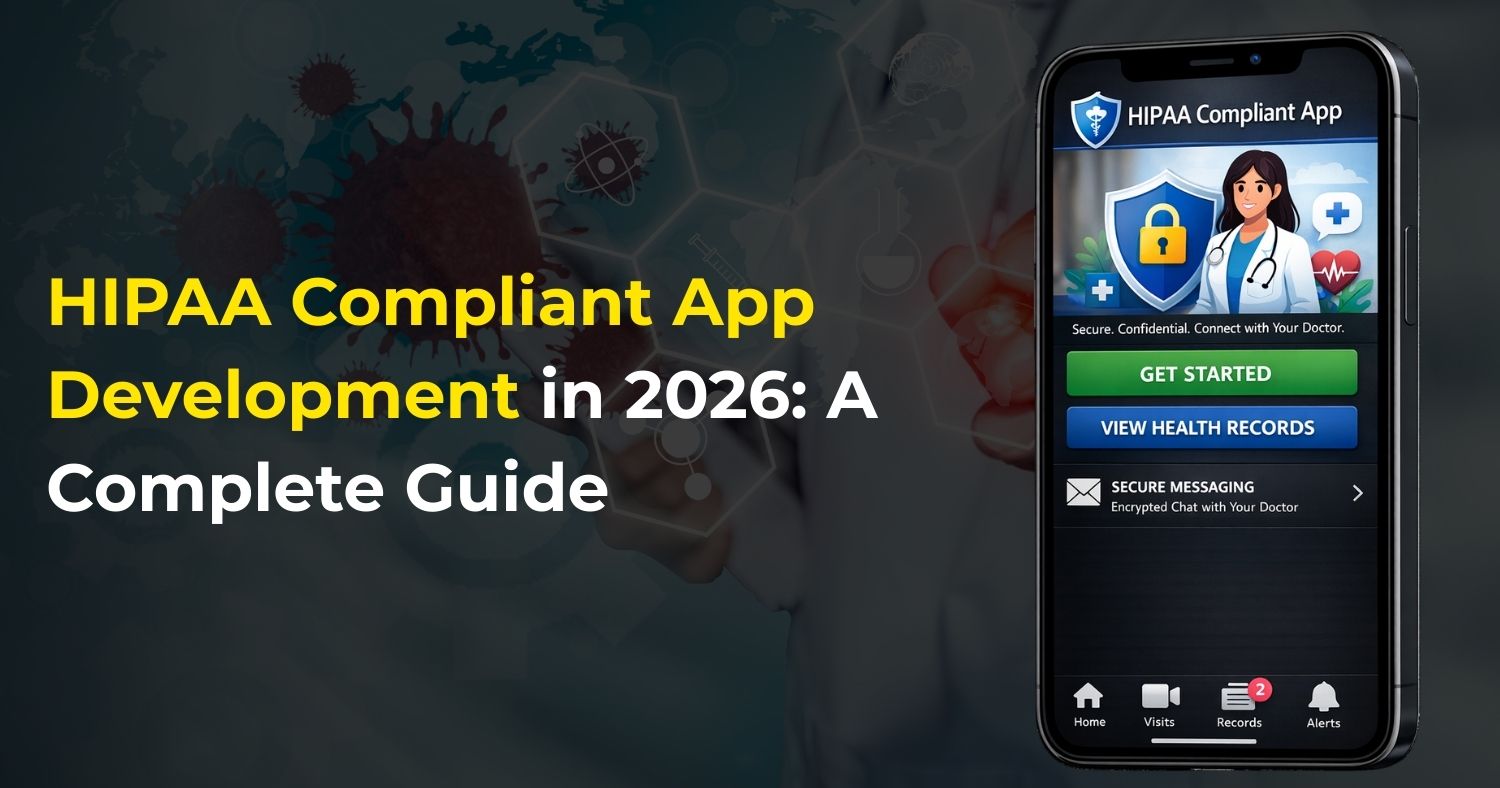
HIPAA Compliant App Development ensures that healthcare apps securely handle patient data while following U.S. federal regulations. In 2026, building a compliant app is crucial for startups, hospitals, and telehealth platforms to protect sensitive health information, maintain trust, and avoid costly penalties.
Healthcare apps today allow patients to book appointments, consult doctors via video, access prescriptions, and manage medical records online. Without HIPAA compliance, these apps are vulnerable to data breaches, costly legal penalties, and loss of user trust.
What is HIPAA Compliance?
HIPAA, or the Health Insurance Portability and Accountability Act, is a U.S. federal law that sets national standards for protecting sensitive patient health information. Any healthcare app that stores, transmits, or manages patient data must comply with HIPAA rules.
HIPAA compliance focuses on:
- Privacy Rule: The Privacy Rule ensures that all patient health information, whether written, oral, or electronic, is protected from unauthorized access or disclosure. It gives patients the right to access their own medical records, request corrections, and control how their information is shared. For healthcare apps, this means implementing strict access controls, ensuring only authorized users—like doctors, nurses, or the patient—can view sensitive data, and clearly communicating privacy policies to users.
- Security Rule: Specifies technical, physical, and administrative safeguards for electronic protected health information (ePHI). This includes data encryption, secure cloud storage, strong passwords, and monitoring for unauthorized access. Following this rule is a core part of HIPAA Compliant App Development.
- Breach Notification Rule: Requires apps to report any breaches to affected users and authorities promptly. Proper HIPAA Compliant App Development ensures timely notification and helps maintain patient trust. Timely reporting not only meets legal requirements but also helps maintain trust with patients and partners.
A HIPAA-compliant app ensures that all patient information, such as medical records, lab reports, and prescription details, is secure and private.
Why HIPAA Compliance is Important in 2026
In 2026, the healthcare industry is highly digitized, with apps connecting patients, doctors, and healthcare facilities in real-time. HIPAA compliance is crucial because:
- Legal Requirements: One of the most critical reasons to comply with HIPAA is to avoid legal consequences. Non-compliance can result in substantial fines ranging from $100 to $50,000 per violation, depending on severity, with a maximum annual penalty of $1.5 million. Beyond financial penalties, organizations may face lawsuits, federal investigations, and reputational damage. For app developers and healthcare businesses, following HIPAA rules is not optional—it’s a legal obligation.
- Data Protection: Patients today are more aware of their privacy rights than ever before. They expect that healthcare apps will securely handle sensitive information such as medical records, prescriptions, and lab results. Implementing robust encryption, secure cloud storage, and strict access controls ensures that patient data is safe from breaches, cyberattacks, or unauthorized sharing. Strong data protection also minimizes operational risks and protects the app from potential security incidents.
- Trust Building: Apps that follow HIPAA Compliant App Development guidelines earn patient confidence and encourage regular use. Trust is especially important for telemedicine apps, where interactions are fully digital, and patient confidence in the platform directly impacts adoption and retention.
- Competitive Advantage: In a rapidly growing digital healthcare market, HIPAA compliance is a key differentiator. Apps that prioritize privacy and security stand out from competitors, attract partnerships with hospitals or clinics, and can expand their user base more effectively. Compliance signals professionalism and reliability, giving healthcare providers and startups a measurable edge in the market.
Healthcare organizations, telemedicine startups, and hospitals must invest in HIPAA Compliant App Development to avoid penalties and maintain credibility.
Key Features of a HIPAA-Compliant App
When developing a HIPAA-compliant app, there are core features that must be included to ensure security and usability:
- User Authentication: Strong login mechanisms, such as two-factor authentication (2FA), biometrics (fingerprint or facial recognition), and secure password policies, help prevent unauthorized access. By verifying the identity of both patients and healthcare providers, apps reduce the risk of data breaches and ensure that sensitive health information remains confidential.
- Data Encryption: All data, whether at rest or in transit, must be encrypted using advanced protocols like AES-256 and HTTPS/SSL. Encryption ensures that even if data is intercepted during transmission or accessed without authorization, it remains unreadable and protected from cyber threats.
- Secure Cloud Storage: Using HIPAA-compliant cloud providers such as AWS, Google Cloud, or Microsoft Azure guarantees that patient information is stored in secure servers with strict access controls, redundant backups, and disaster recovery measures. This also allows the app to scale safely as the user base grows.
- Audit Logs: Maintaining detailed logs of all user activity, including logins, data access, and modifications, is critical for accountability. Audit logs help detect suspicious behavior, investigate potential breaches, and demonstrate compliance during regulatory audits.
- Access Control: Role-based access ensures that only authorized personnel can access certain types of patient information. For example, doctors may access complete medical records, nurses may access treatment notes, and patients can view only their personal health data. This minimizes exposure and reduces the likelihood of accidental or malicious data leaks.
- Secure Messaging: Encrypted communication channels for text, video, and audio between patients and healthcare providers are essential. Secure messaging allows users to share sensitive health information, reports, and prescriptions without the risk of interception or data leaks.
- Emergency Access: Controlled emergency protocols allow authorized staff to access patient records in urgent situations without violating compliance rules. These measures are carefully logged to maintain accountability and ensure that emergency access does not compromise overall security.
These features are essential not only for security but also for building a reliable and trustworthy healthcare app.
Step-by-Step Guide: How to Build a HIPAA Compliant App
- Understand HIPAA Requirements: Start by studying HIPAA rules, focusing on privacy, security, and breach notification standards. Document how your app will meet each requirement.
- Plan App Features: Decide which features your app will include. Will it offer telemedicine consultations, appointment scheduling, lab report uploads, or prescription management? Each feature must follow HIPAA rules.
- Choose the Right Technology Stack: Use secure programming languages, frameworks, and HIPAA-compliant cloud storage. Popular choices include React Native for cross-platform apps and secure backends like Node.js or Python.
- Implement Strong Security Measures: Encrypt all sensitive data, add multi-factor authentication, and create role-based access control. Conduct regular vulnerability testing to identify and fix security gaps.
- Sign Business Associate Agreements (BAA): If using third-party services like cloud providers or payment gateways, ensure they sign a BAA confirming they will comply with HIPAA.
- Testing and Compliance Audit: Conduct thorough testing, including penetration tests, privacy audits, and compliance checks. Only launch the app after all HIPAA requirements are verified.
- Maintenance and Updates: HIPAA compliance is ongoing. Keep software updated, patch vulnerabilities, and monitor data access continuously.
How Much Does HIPAA-Compliant App Development Cost in 2026?
The cost varies based on app complexity, features, platform, and security requirements. Some key cost factors include:
Basic HIPAA App: $50,000 – $80,000
A basic HIPAA-compliant app is ideal for small clinics, individual healthcare providers, or startups testing the digital healthcare market. These apps usually include essential features such as:
- Secure messaging between patients and healthcare providers
- Patient registration and profile management
- Appointment booking and scheduling
- Basic notifications and reminders
The design is usually straightforward, and third-party integrations are minimal, which helps reduce both development time and cost. While simple, these apps provide a reliable way to offer basic telehealth services while maintaining HIPAA compliance.
Mid-Level App: $90,000 – $180,000
Mid-level apps are suitable for growing healthcare businesses or telemedicine startups that require more robust functionality. Typical features include:
- Video and audio consultations
- E-prescriptions and pharmacy integration
- Payment gateway integration for secure transactions
- Integration with Electronic Health Record (EHR) systems
- Enhanced UI/UX design for better patient experience
- Notifications, reminders, and patient history tracking
These apps require more development resources due to the additional features, secure integrations, and testing for HIPAA compliance. They provide a more complete telehealth experience for patients and doctors, making them ideal for clinics looking to scale.
Advanced App: $200,000 – $350,000+
Advanced HIPAA-compliant apps are designed for hospitals, healthcare networks, or enterprise-level providers. They include sophisticated features such as:
- AI-based diagnostics and symptom checking
- Remote patient monitoring and real-time health tracking
- Connecting with wearable devices to gather real-time patient health data.
- Cloud-based storage with analytics dashboards for providers
- Multi-layered security, end-to-end encryption, and detailed audit logs
- Telemedicine features with multi-party video calls, specialist access, and follow-ups
The higher cost reflects the complexity of development, advanced features, strict compliance, scalability, and ongoing maintenance. These apps offer a complete digital healthcare ecosystem that supports large volumes of patients and healthcare providers while maintaining HIPAA compliance.
Key Factors Affecting Cost:
- Number of features and their complexity
- Platform choice (iOS, Android, or cross-platform)
- Third-party integrations such as EHR systems, payment gateways, or AI tools
- UI/UX design quality
- Security measures, including encryption, secure storage, and compliance audits
Investing in a HIPAA-compliant app ensures patient trust, legal safety, and long-term business growth. For reference, exploring the telemedicine app development cost in the USA can provide insights into industry pricing and help plan your budget efficiently.
Best Practices for Developing a HIPAA-Compliant App
- Secure Coding: Developers should follow secure coding standards to minimize vulnerabilities in the app. This includes input validation, preventing SQL injection, avoiding hard-coded credentials, and regularly updating libraries and frameworks. Secure coding ensures that the app is resistant to cyberattacks and data leaks, providing a strong foundation for HIPAA compliance.
- Regular Security Audits: Conducting continuous security audits is essential to identify and fix potential vulnerabilities before they are exploited. Audits should cover penetration testing, code reviews, vulnerability assessments, and compliance checks. Regular audits not only maintain HIPAA compliance but also demonstrate due diligence during regulatory inspections.
- Employee Training: Every team member, from developers to support staff, must understand HIPAA regulations and follow secure practices. Regular training sessions on data privacy, handling of protected health information (PHI), and identifying potential security threats reduce human error, which is one of the leading causes of data breaches in healthcare apps.
- User Education: Educating patients and app users about how their data is collected, stored, and protected builds trust and encourages proper use of the app. Clear privacy policies, consent forms, and step-by-step guides on secure login and messaging help users feel confident that their health information is safe.
- Integration with Trusted Services: Many apps rely on third-party services like cloud storage, payment gateways, or EHR systems. Only integrate with providers that are HIPAA-compliant and willing to sign a Business Associate Agreement (BAA). Trusted integrations ensure that your app’s data remains secure across all systems and reduces the risk of non-compliance.
Healthcare businesses often collaborate with a Healthcare mobile app development company to ensure both compliance and smooth app functionality.
Future Trends in HIPAA-Compliant App Development
- AI-Powered Healthcare Apps: AI can help with diagnostics and patient care while maintaining compliance.
- Telemedicine Integration: More apps will combine HIPAA compliance with telehealth services.
- Wearable Device Integration: Securely collect patient data from smart devices for monitoring.
- Cloud-Based Healthcare Solutions: HIPAA-compliant cloud services will remain essential for storage and scalability.
- Patient-Centric Apps: Focus on improving patient experience while maintaining privacy and security.
Conclusion
HIPAA Compliant App Development in 2026 is no longer optional for healthcare providers, startups, or telemedicine platforms—it is essential. Ensuring that patient data is secure, private, and handled according to federal regulations protects your organization from legal penalties while building trust with users.
From basic apps with secure messaging and appointment booking to advanced platforms featuring AI diagnostics, remote monitoring, and cloud storage, the scope of HIPAA compliance affects every stage of development. Following best practices, choosing the right technology stack, implementing encryption, and conducting regular audits are critical steps to maintain compliance.
Frequently Asked Questions
Related Posts

23 Sep 2025
How To Build Social Media App with Next Gen AI Power
The social media space is a crowded attention marketplace, with many platforms targeting user engagement. Building a new social app in this ecosystem ..
Matthew Connor
4 Mar 2025
Ultimate Guide to Building an AI App Step-by-Step
Artificial Intelligence (AI) is revolutionizing the world by making technology more efficient and companies more productive. From robotics that can pe..
Matthew Connor
Join the newsletter and get all the updates.
Subscribe
 +1 (443) 454-3676
 sales@whitehalltechnologies.com
 501 East Las Olas Blvd., Suite 200 and 300, Fort
Lauderdale, Florida, FL 33301
501 East Las Olas Blvd., Suite 200 and 300, Fort
Lauderdale, Florida, FL 33301


