3 Feb 2026
How Much Does It Cost to Build a Trading App like eToro?

Matthew Connor




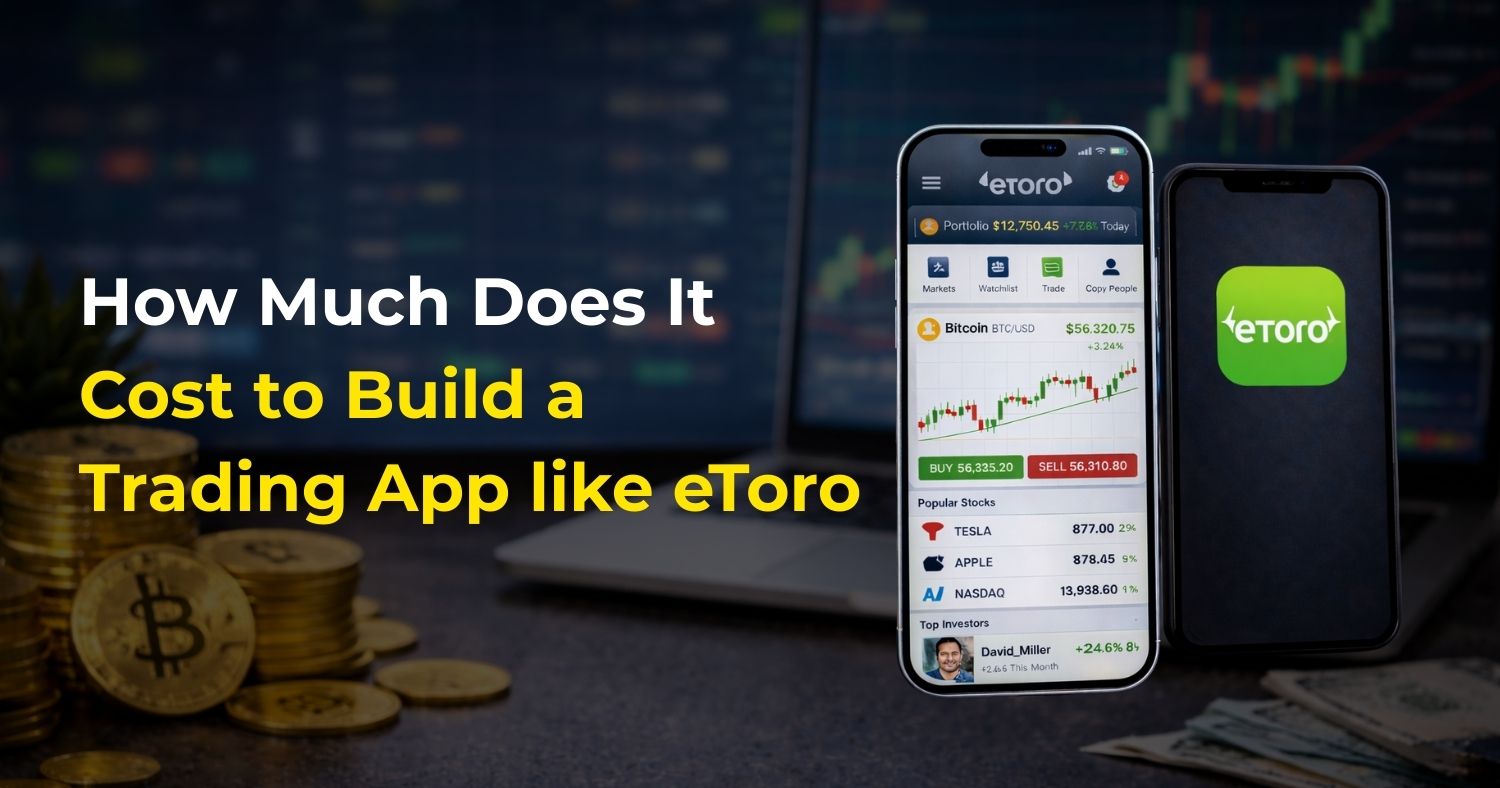
Developing a trading app like eToro involves varying costs based on features, platform selection (iOS, Android, or both), security standards, and overall app complexity. A basic trading app generally costs between $20,000 and $50,000, while advanced platforms with real-time analytics, AI App development, and multi-platform support can exceed $100,000, defining the Cost to build a Trading App like eToro.
Modern trading apps go beyond basic buy-and-sell functionality by offering real-time market data, portfolio tracking, secure payment systems, instant notifications, advanced charting tools, AI-based insights, and social trading features. Each additional feature, especially security and regulatory compliance, directly influences development time and overall cost.
In this guide, we break down all the factors that influence trading app development cost, helping startups, entrepreneurs, and businesses plan their budget and make informed decisions before hiring a development team.
Understanding Trading App Development
What is a Trading App?
Trading app development is the process of creating mobile or web applications that allow users to buy, sell, and manage financial assets such as stocks, cryptocurrencies, commodities, or forex. These apps are more than simple marketplaces—they combine real-time market data, analytics, AI-driven insights, and secure transactions into a seamless user experience. Understanding how these apps are built is essential for anyone planning to enter the trading technology space.
Cost to Build a Trading App like eToro
Building a trading app is a significant investment, and the cost depends on the app’s complexity, platform, features, and development approach. Understanding the cost breakdown helps startups, entrepreneurs, and businesses plan their budgets and prioritize essential features. Below is a detailed guide:
MVP (Minimum Viable Product)
An MVP is ideal for startups that want to test the market quickly with minimal investment. The cost typically ranges from $20,000 to $50,000. The focus here is on core features that allow users to trade and monitor markets without advanced functionalities.
Core features include:
- User registration and authentication: Secure signup, login, and password recovery ensure that only verified users can access the app. Options like email verification, OTP, or social logins can be included for ease of use.
- Market data display: Real-time stock, cryptocurrency, or commodity prices help users make informed decisions. Basic charts, simple data visualization, and trending asset highlights can be added even at the MVP stage.
- Basic trading features: Users can place buy and sell orders, view transaction history, and track the status of their trades efficiently.
- Notifications: Alerts for price changes, trade confirmations, account updates, and trending news keep users engaged and informed. Push notifications can also provide market insights.
- Dashboard overview: A simple home screen showing portfolio balance, total investments, and basic stats helps users quickly understand their performance.
- Support and help: Basic customer support or an FAQ section can be integrated to assist new users.
Benefits of an MVP:
- Quick market validation: Test your app idea with real users and gather insights before investing heavily.
- Lower initial investment: Reduce upfront costs by focusing only on core functionalities.
- Ability to gather early user feedback: Understand what features users like, need, or want to improve, which informs future app versions.
- Faster time-to-market: Enter the market quickly, giving you a competitive advantage.
- Reduced development risk: Avoid wasting resources on features users may not use.
- Foundation for scaling: Once the MVP is successful, it can be upgraded with advanced features like AI recommendations, social trading, multi-asset support, and analytics dashboards.
Medium Complexity App
A medium-level app includes additional features that enhance user engagement and trading efficiency. The development cost ranges from $50,000 to $100,000, depending on added functionality.
Typical features include:
- Portfolio tracking: Monitor investments across multiple assets with detailed analytics.
- Advanced analytics: Technical charts, trend analysis, and performance metrics for better trading decisions.
- Payment integrations: Seamless deposits and withdrawals via multiple gateways, including digital wallets and bank transfers.
- AI suggestions: Personalized trading recommendations based on user behavior, trends, and portfolio performance.
- Social trading features: Users can follow and copy trades of experienced traders, engage in discussions, and join in-app communities.
Advantages:
- Higher user retention: Engaging features like AI suggestions, social trading, and advanced analytics keep users coming back to the app.
- Competitive edge: Offering more tools than basic apps positions your platform ahead in the competitive trading app market.
- Scalability: The app is designed to accommodate growing user bases, allowing future feature additions like multi-asset trading, in-app chat, or advanced AI analytics.
- Better monetization: Medium complexity apps can integrate subscription plans, premium features, or transaction-based revenue models.
- Enhanced user experience: Interactive dashboards, real-time notifications, and analytics make the app more intuitive and user-friendly, which improves overall satisfaction.
High Complexity App
High-end trading apps, like eToro or Robinhood, are feature-rich and cost $100,000 – $250,000+. These apps are designed for large-scale operations with complex trading systems, regulatory compliance, and advanced analytics.
High complexity app features:
- Multi-asset trading: Stocks, crypto, ETFs, forex, and commodities.
- AI-driven personalized recommendations and predictive analytics: Smart insights for professional trading decisions.
- Social trading: In-app community, discussion boards, and leaderboards for collaborative trading.
- In-app chat: Direct communication between users or with support teams.
- Advanced security protocols: Multi-factor authentication, encryption, fraud detection, and secure wallets.
- Regulatory compliance: GDPR, KYC/AML verification, SEC, or local market approvals.
- Real-time analytics dashboards: Portfolio monitoring, market updates, and predictive insights.
- Advanced trading tools: Stop-loss, limit orders, margin trading, and technical indicators for professional traders.
Also read our guide on: Build a Trading Apps Like Robinhood
Benefits:
- High scalability and performance: Designed to handle thousands or millions of users simultaneously without lag or downtime. Ideal for large-scale trading platforms.
- Builds credibility and trust: Strong security measures, regulatory compliance, and robust infrastructure reassure users that their investments are safe.
- Attracts professional traders: Advanced analytics, multi-asset trading, AI insights, and social trading features cater to experienced traders seeking professional-grade tools.
- Enhanced user engagement: Social trading communities, AI recommendations, and real-time notifications keep users actively engaged on the platform.
- Revenue growth opportunities: High complexity apps can monetize through premium subscriptions, advanced features, transaction fees, or brokerage services.
- Competitive advantage: Offering an all-in-one trading platform with advanced tools differentiates your app from competitors, helping attract both beginner and professional investors.
Tip: High complexity apps are best suited for enterprises, fintech startups, or trading platforms aiming to compete with top players in the market. Careful planning of features, security, and regulatory compliance is essential to ensure a successful launch.
Factors Affecting Trading App Development Cost
The cost of developing a trading app is not fixed—it depends on multiple factors. Understanding these variables helps you plan your budget effectively and make informed decisions.
- App Complexity and Features: The more features your trading app has, the higher the cost. Basic buy/sell functionality is affordable, but adding portfolio management, AI-driven insights, social trading, multi-asset support, real-time alerts, and advanced analytics significantly increases development time and budget. Each additional feature requires extra backend logic, testing, and security layers.
- Platform Choice: iOS-only apps are generally cheaper due to limited device fragmentation, while Android apps require testing across multiple screen sizes and devices. Cross-platform development (iOS + Android) costs more initially but helps businesses reach a wider audience and reduce long-term maintenance costs.
- UI/UX Design Complexity: Interactive dashboards, real-time charts, customizable layouts, dark mode, and personalized user experiences increase design effort. A well-designed UI/UX improves user engagement and retention but requires skilled designers, prototyping, and usability testing, which adds to the overall cost.
- Security and Compliance: Trading apps handle sensitive financial data, making security non-negotiable. Features like encryption, secure payment gateways, two-factor authentication (2FA), fraud detection, and compliance with KYC, AML, GDPR, and regional regulations increase development complexity but are essential for legal operation and user trust.
- API and Third-Party Integrations: Integrating live market data providers, payment gateways, banking APIs, notification services, and AI analytics tools adds to the development effort. Reliable APIs ensure real-time performance but often come with setup costs, licensing fees, and ongoing maintenance.
- Geographic Location of Development Team: Development costs vary greatly by region. Teams in the US, Canada, or Western Europe charge higher hourly rates, while developers in India or Eastern Europe offer cost-effective solutions without compromising quality when working with experienced firms.
- Maintenance and Updates: Post-launch expenses include bug fixes, performance optimization, server hosting, security updates, feature enhancements, and scaling infrastructure as the user base grows. These ongoing costs are crucial for long-term app stability and user satisfaction.
- Development Methodology: Agile and iterative development allow continuous testing, faster feedback, and better product quality. While this approach may slightly increase upfront costs, it reduces long-term risks, prevents costly rework, and ensures the app evolves according to market and user needs.
Choosing a Trading Platform Development Company
Selecting the right development partner plays a crucial role in the success of your trading app. Working with a reliable mobile app development company in Washington or an experienced global team ensures your platform meets security standards, follows regulatory requirements, and is built to scale as your user base grows.
Key Considerations:
- Experience in fintech app development.
- Portfolio of trading apps.
- Client reviews and case studies.
- Post-launch support and maintenance.
Benefits of a Professional Company:
- Faster development.
- Better security and compliance.
- Scalability for future updates.
- Expertise in AI features and analytics
By carefully evaluating development companies, you can avoid costly mistakes, ensure compliance, and launch a secure trading app that stands out in the competitive market.
Conclusion
Developing a trading app requires careful planning, budgeting, and the right development team. Costs vary based on complexity, features, security, and platform choice. Start small, scale gradually, and focus on delivering a secure, user-friendly experience to attract and retain investors.
Frequently Asked Questions
Related Posts

23 Sep 2025
How To Build Social Media App with Next Gen AI Power
The social media space is a crowded attention marketplace, with many platforms targeting user engagement. Building a new social app in this ecosystem ..
Matthew Connor

4 Mar 2025
Ultimate Guide to Building an AI App Step-by-Step
Artificial Intelligence (AI) is revolutionizing the world by making technology more efficient and companies more productive. From robotics that can pe..
Matthew Connor
Join the newsletter and get all the updates.
Subscribe
 +1 (443) 454-3676
 sales@whitehalltechnologies.com
 501 East Las Olas Blvd., Suite 200 and 300, Fort
Lauderdale, Florida, FL 33301
501 East Las Olas Blvd., Suite 200 and 300, Fort
Lauderdale, Florida, FL 33301


