19 Dec 2025
Updated on January 15th, 2026
What Is the 7 Step Process to Restaurant Mobile App Development?

Matthew Connor




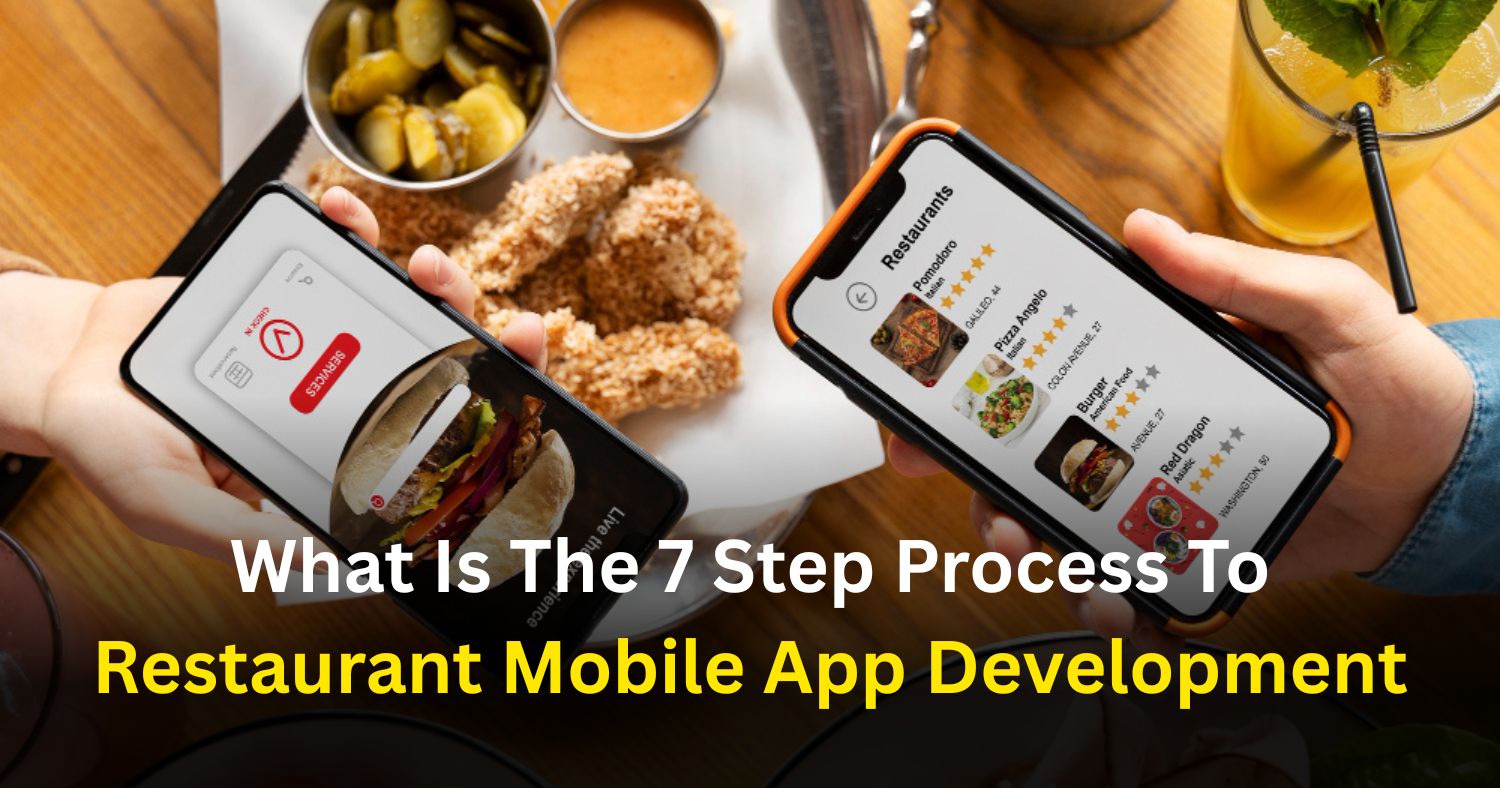
The food industry has changed rapidly in recent years, and Restaurant Mobile App Development has become a key solution for restaurants that want to meet modern customer expectations. Today, most customers prefer ordering food online instead of visiting restaurants. Mobile apps allow customers to order from their favorite restaurants easily, while helping restaurant owners manage orders, payments, and deliveries more efficiently from one platform.
These trends have encouraged many restaurant owners to develop their own mobile apps. If you are considering creating an app, understanding the Process of Restaurant Mobile App Development is essential. It helps restaurant owners plan, design, and launch apps that enhance customer experience and streamline business operations.
Why Restaurant Mobile Apps Are Important Today
Restaurant mobile applications are no longer just an option. They have turned into the very backbone of contemporary food companies.
Main reasons restaurant apps are important:
- Online ordering of food is what customers
- Quicker processing of orders
- Simple changes to the menu
- More interaction with customers
- Higher turnover and repeated orders
With the help of a professional App development company for restaurants, businesses can build apps that improve both customer experience and restaurant operations.
7 Step Process to Restaurant Mobile App Development
Step 1: Understand Your Restaurant App Idea
The first and most important step is to clearly define your restaurant app idea. A well-defined concept helps avoid confusion, reduces development errors, and ensures the final app meets both business and customer expectations. When your idea is clear, developers can plan features, timelines, and budgets more accurately.
Before moving forward, ask yourself some essential questions:
- Is the app for a single restaurant, a cloud kitchen, or multiple branches?
- Will it support dine-in reservations, takeaway orders, home delivery, or all three?
- Who is your target audience—families, working professionals, students, or late-night customers?
- What problem will your app solve, such as long wait times, order mistakes, or lack of convenience?
Understanding your business goals, revenue model, and customer pain points at this stage ensures smoother development later. A professional Best food delivery app development company always begins by understanding the restaurant’s vision, operational workflow, and long-term growth plans.
Step 2: Market Research and Planning
Market research helps you understand what customers expect and how competitors are performing. This step ensures your app stands out instead of copying existing solutions. Strong planning reduces risks and increases the chances of success after launch.
Market research typically includes:
- Studying top competitor apps and their features
- Analyzing customer reviews to identify common complaints
- Finding missing features or service gaps in existing apps
- Understanding pricing strategies, offers, and loyalty programs
- Identifying popular cuisines, delivery trends, and peak order times
This research helps you decide what to include and what to avoid. It also supports better pricing, feature selection, and user experience design. Proper planning based on real market data helps build an app that attracts users, increases orders, and supports long-term business growth.
Step 3: Decide App Features and Structure
Features define how users interact with your restaurant app. Planning features in advance helps avoid frequent changes during development and ensures a smooth user experience. The right feature set improves customer satisfaction, boosts repeat orders, and increases revenue.
Common Customer App Features:
- User Login and Signup: Secure login using mobile number, email, or social media.
- Menu Browsing: Well-organized menu with images, descriptions, and pricing.
- Search and Filters: Find dishes by cuisine, price, dietary preference, or popularity.
- Online Ordering: Simple order placement with customization options.
- Multiple Payment Options: Cards, wallets, UPI, net banking, and cash on delivery.
- Order Tracking: Live updates from order confirmation to delivery.
- Push Notifications: Alerts for offers, discounts, order status, and new launches.
Restaurant Admin Features:
- Order Management: Accept, reject, or prioritize orders easily.
- Menu Control: Update dishes, prices, and availability in real time.
- Offers and Discounts: Create coupons, festive deals, and loyalty rewards.
- Sales Reports: Track daily, weekly, and monthly performance.
Delivery Partner Features:
- Order Alerts: Instant notifications for delivery requests.
- Route Navigation: Optimized routes for faster deliveries.
- Status Updates: Mark orders as picked up, on the way, or delivered.
A reliable App development company for restaurants helps you select features based on your budget, target audience, and future scalability.
Step 4: Choose the Right Platform
Choosing the right platform determines how many users your app can reach. The platform decision affects development cost, performance, and long-term maintenance.
Platform Options:
- Android: Large global user base, flexible device support, and wide reach.
- iOS: High security, smooth performance, and users with higher spending potential.
- Both Android & iOS: Maximum reach and better brand visibility.
Many restaurants prefer launching on both platforms to capture a wider audience. Using cross-platform technologies like React Native or Flutter allows developers to build one app for both platforms, saving time and cost. Choosing the platform early helps keep development on schedule and avoids rework.
Step 5: Design a Simple and User-Friendly App
Design plays a major role in user retention. Even the best features fail if the app is difficult to use. A clean and simple design ensures customers can place orders quickly without confusion.
Good restaurant app design includes:
- Easy and logical navigation
- Clear call-to-action buttons
- Simple and attractive menu layout
- Large, readable fonts
- Fast and smooth checkout process
- Consistent colors and branding
Restaurant apps should be easy to use for all age groups, including first-time users. A professional food delivery app development company in USA focuses on usability, visual appeal, and performance to ensure customers enjoy using the app and keep coming back.
Step 6: App Development and Testing
App development is a structured process involving multiple layers to ensure smooth performance, security, and usability.
- Front-End Development: Focuses on the app’s user interface (UI) and user experience (UX). This includes designing layouts, buttons, navigation, and interactive elements to ensure the app is visually appealing and easy to use.
- Back-End Setup: Handles server-side logic, APIs, authentication, and communication between the app and the database. A strong back-end ensures reliability and fast performance.
- Database Creation: Stores user data, orders, payments, and other critical information securely. Efficient database management is crucial for app speed and scalability.
- Payment Gateway Integration: Ensures safe and seamless transactions through credit/debit cards, wallets, UPI, or other payment methods. Security compliance is essential here.
- Order Tracking System: Provides real-time updates for users, restaurants, or delivery partners, improving transparency and satisfaction.
Testing is Equally Important
Testing ensures the app functions correctly, is secure, and delivers a smooth user experience. Key testing types include:
- Feature Testing: Verifies that all app features work as intended across different scenarios.
- Speed Testing: Checks app performance, load times, and responsiveness under varying conditions.
- Payment Testing: Ensures all transactions are processed accurately and securely.
- Device Compatibility Testing: Confirms the app works flawlessly across various devices, screen sizes, and operating systems.
Testing ensures the app works properly before it reaches customers. Skipping testing can lead to a poor user experience.
Step 7: App Launch and Ongoing Support
Launching an app is a critical phase that requires careful execution to ensure a smooth release. Key tasks include:
- Final Quality Checks: Conduct last-minute testing to verify functionality, design, performance, and security.
- App Store Submission: Prepare all required assets, descriptions, and screenshots for submission to Google Play Store or Apple App Store.
- Store Approval: Follow platform guidelines and respond to any queries from the app store review team to get the app approved for release.
Post-Launch Support
App development doesn’t end after launch. Continuous support is essential to maintain performance and user satisfaction:
- Bug Fixes: Quickly address issues reported by users or discovered during usage.
- Performance Improvements: Optimize loading speed, app responsiveness, and server efficiency.
- Feature Updates: Add new features or improve existing ones based on user needs and market trends.
- Customer Feedback Handling: Monitor reviews, respond to user queries, and use feedback to enhance app experience.
Benefits of Building a Restaurant Mobile App
Building a restaurant mobile app offers significant advantages for both restaurant owners and customers. In today’s digital-first world, customers prefer ordering food through mobile apps because they are fast, convenient, and reliable. A dedicated restaurant app helps businesses improve operational efficiency, increase sales, and build stronger relationships with customers.
Restaurant apps create a direct communication channel between the restaurant and its customers. This allows owners to send real-time updates, promote offers, and gather valuable feedback. With better control over orders, payments, and customer interactions, restaurants can deliver a smoother and more personalized experience. Over time, this leads to higher customer retention, improved brand visibility, and steady business growth.
Benefits for Restaurant Owners
- Direct Online Orders: Receive orders directly through your app without relying on third-party platforms.
- Lower Commission Fees: Save money by avoiding high commissions charged by food delivery marketplaces.
- Better Customer Data: Access valuable insights such as ordering habits, favorite dishes, and peak hours.
- Improved Order Management: Track and manage orders efficiently from a single dashboard.
- Increased Brand Loyalty: Push notifications, loyalty programs, and personalized offers encourage repeat orders.
- Higher Profit Margins: Reduced dependency on aggregators helps increase overall revenue.
Benefits for Customers
- Easy Ordering: Simple and quick ordering process from anywhere, anytime.
- Faster Service: Direct orders reach the restaurant instantly, reducing delays.
- Special Offers and Discounts: Access app-only deals, coupons, and reward points.
- Order Tracking: Real-time updates from order confirmation to delivery.
- Multiple Payment Options: Secure and flexible payment methods for convenience.
- Better User Experience: Clean design and smooth navigation improve satisfaction.
Overall, investing in a restaurant mobile app is a smart decision for restaurants looking to grow, stay competitive, and build long-term customer relationships. A well-designed app not only boosts sales but also strengthens your brand in an increasingly digital food industry.
Conclusion
Restaurant owners can learn how to transform their idea into a functional app by following the seven-step process for restaurant mobile app development. From planning and design to development and launch, each step is important.
Businesses can create user-friendly apps that boost sales and customer satisfaction by collaborating with a seasoned restaurant app development company. Proper planning, simple design, and ongoing support are the keys to a successful restaurant mobile app.
Frequently Asked Questions
Related Posts

23 Sep 2025
How To Build Social Media App with Next Gen AI Power
The social media space is a crowded attention marketplace, with many platforms targeting user engagement. Building a new social app in this ecosystem ..
Matthew Connor
4 Mar 2025
Ultimate Guide to Building an AI App Step-by-Step
Artificial Intelligence (AI) is revolutionizing the world by making technology more efficient and companies more productive. From robotics that can pe..
Matthew Connor
Join the newsletter and get all the updates.
Subscribe
 +1 (443) 454-3676
 sales@whitehalltechnologies.com
 501 East Las Olas Blvd., Suite 200 and 300, Fort
Lauderdale, Florida, FL 33301
501 East Las Olas Blvd., Suite 200 and 300, Fort
Lauderdale, Florida, FL 33301


