23 Jan 2026
Top Advantages of Using Voice Recognition in Healthcare Apps

Matthew Connor




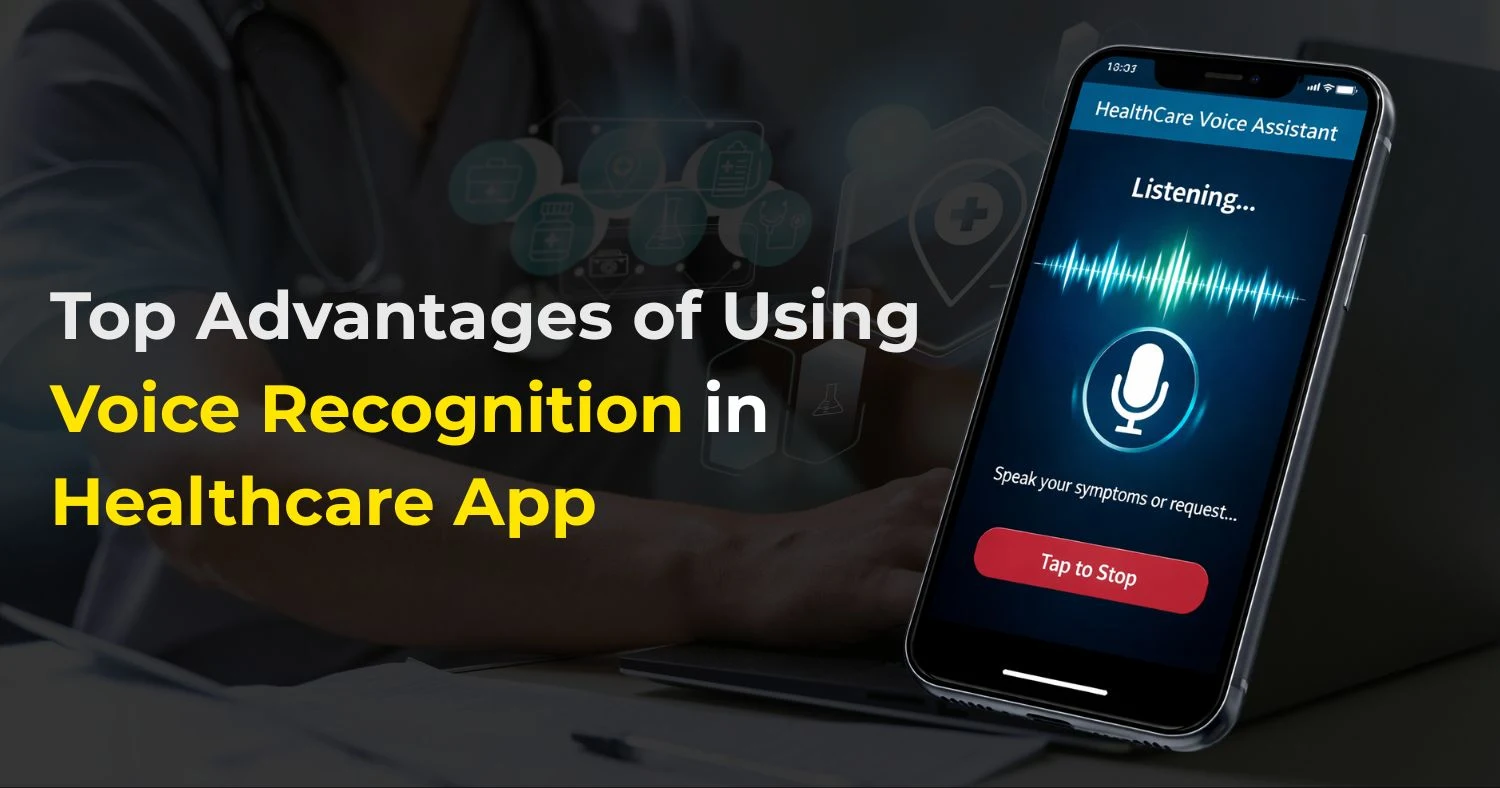
Voice recognition technology has revolutionized many industries, and healthcare is no exception. By allowing users to interact with apps using voice commands, healthcare apps can improve efficiency, accuracy, and accessibility. From scheduling appointments to accessing patient records and documenting medical notes, voice recognition has become a critical tool for modern healthcare solutions.
Healthcare providers and businesses aiming to innovate should explore the potential of voice recognition technology in healthcare apps. This blog highlights the key advantages of integrating voice recognition into healthcare solutions, showcasing practical examples, real-world use cases, and emerging trends shaping the future of patient care.
Why Voice Recognition Matters in Healthcare
Voice recognition technology enables healthcare apps to convert spoken words into digital data, transforming the way patients and healthcare professionals interact with digital platforms. By allowing hands-free communication, apps become faster, more intuitive, and more efficient. Here’s why voice recognition is becoming essential in healthcare:
- Enhanced Efficiency: Voice recognition reduces the time spent typing or navigating app menus. Doctors and nurses can quickly input data or update records while focusing on patient care.
- Improved Accuracy: It minimizes errors in patient records and prescriptions by accurately transcribing spoken information and reducing manual entry mistakes.
- Accessibility: Voice-enabled apps assist visually impaired users and those with limited mobility, allowing them to access health information and perform tasks hands-free.
- Better Patient Engagement: Patients can interact naturally with apps using voice commands, making it easier to follow treatment plans and stay involved in their healthcare.
Healthcare organizations using professional healthcare app development services or partnering with an AI app development company can leverage these advantages to enhance service quality and operational efficiency.
Top Advantages of Using Voice Recognition in Healthcare Apps
Faster Medical Documentation
Doctors and healthcare staff spend significant time documenting patient information. Voice recognition allows for:
- Hands-Free Recording: Clinicians can dictate notes while performing medical procedures.
- Real-Time Transcription: Spoken words are converted into text instantly.
- Reduced Administrative Burden: Less manual data entry, freeing up time for patient care.
This not only improves workflow but also enhances the quality of documentation, ensuring accurate patient records.
Improved Patient Engagement and Experience
Voice recognition enables patients to interact with healthcare apps more naturally. Benefits include:
- Simplified Navigation: Users can access information or book appointments using voice commands.
- Medication Reminders: Patients receive voice alerts for medication schedules.
- Health Monitoring: Users can verbally input symptoms or update health data.
A more engaging and interactive app leads to higher patient satisfaction and adherence to medical advice.
Enhanced Accessibility
Voice-enabled healthcare apps are particularly useful for patients with disabilities:
- Visually Impaired Users: Navigate apps without relying on visual cues.
- Elderly Users: Speak commands instead of typing on small screens.
- Patients with Mobility Issues: Operate the app without physical interaction.
By improving accessibility, healthcare apps can serve a wider audience and ensure inclusive healthcare services.
Better Clinical Decision Support
Voice recognition can integrate with AI-powered clinical decision systems to:
- Analyze Dictated Notes: Identify potential risks or recommend treatment options.
- Flag Critical Conditions: Automatically alert doctors to urgent patient needs.
- Streamline Communication: Share updates with medical teams quickly.
Healthcare organizations using healthcare app development services can leverage these insights for improved patient outcomes.
Efficient Appointment Scheduling
Voice recognition simplifies appointment management:
- Book Appointments: Patients can schedule visits using natural language.
- Reschedule or Cancel: Users can modify appointments verbally.
- Receive Reminders: Voice alerts for upcoming consultations.
This reduces administrative workload and enhances the patient experience.
Secure Data Entry and Retrieval
Healthcare apps often handle sensitive patient data. Voice recognition contributes to security by:
- Authentication via Voice Biometrics: Confirms user identity using unique voice patterns.
- Encrypted Data Transmission: Ensures patient information is securely stored and shared.
- Error Reduction: Minimizes mistakes in manual data entry.
Secure and reliable voice interaction helps build trust among users.
Integration with Wearable Devices
Voice-enabled healthcare apps can work seamlessly with wearable devices:
- Health Monitoring: Users can dictate symptoms or report health metrics.
- Activity Tracking: Voice commands control wearable functionalities.
- Remote Patient Monitoring: Doctors receive updates through voice-enabled apps connected to wearables.
Integration with wearables enhances patient care and real-time monitoring.
Support for Telemedicine
Telemedicine apps benefit greatly from voice recognition:
- Hands-Free Communication: Doctors and patients can interact without typing.
- Note-Taking During Consultations: Dictate symptoms, treatments, and prescriptions.
- Improved Remote Care: Voice commands facilitate easy access to patient records and instructions.
Voice technology helps telehealth providers offer efficient, patient-friendly services.
Multi-Language Support
Voice recognition supports multiple languages, which is vital in diverse healthcare settings:
- Patient Comfort: Communicate in their preferred language.
- Reduced Miscommunication: Accurate voice-to-text transcription in multiple languages.
- Global Reach: Healthcare apps can cater to international users.
Future-Proofing Healthcare Apps
Integrating voice recognition ensures that your healthcare app stays relevant:
- AI and Machine Learning Integration: Improves predictive analytics and personalized care.
- Continuous Updates: Keep up with evolving healthcare standards.
- Competitive Advantage: Offer advanced features that attract more users.
By adopting voice recognition technology, healthcare providers demonstrate innovation and commitment to patient-centered care.
Read More: The Ultimate Business Guide to Healthcare Mobile App Development.
How to Implement Voice Recognition in Healthcare Apps
Step 1: Partner with a Professional Healthcare App Development Company
A skilled development partner ensures:
- Proper integration of voice recognition features.
- Compliance with healthcare regulations (HIPAA, GDPR).
- Scalable and secure app architecture.
Step 2: Choose the Right Voice Recognition Technology
Options include:
- Cloud-Based APIs: Google Speech-to-Text, Amazon Transcribe, Microsoft Azure.
- On-Device Recognition: Ensures privacy and faster response.
- AI-Powered Solutions: Improve accuracy through natural language processing.
Step 3: Design for Usability and Accessibility
- Voice commands should be simple and intuitive.
- Provide fallback options for manual input.
- Support multiple languages and dialects.
Step 4: Test Extensively
- Evaluate accuracy in noisy environments.
- Test across different accents and languages.
- Ensure integration with EMR/EHR systems is seamless.
Step 5: Maintain and Update Regularly
- Continuously train AI models.
- Keep up with regulatory requirements.
- Monitor app performance and user feedback.
Professional healthcare app development services can guide businesses through these steps for optimal results.
Future Trends in Voice Recognition for Healthcare Apps
Voice recognition technology is evolving rapidly in the healthcare sector, driven by advancements in AI, machine learning, and natural language processing. Here are the key future trends shaping voice-enabled healthcare applications:
Advanced AI Assistance
- Voice recognition will move beyond simple commands to predictive and context-aware assistance.
- AI-driven healthcare apps can analyze patient data and offer proactive health alerts, such as reminders for medication, early warnings for abnormal health readings, or guidance during emergencies.
- Example: A patient with diabetes could receive voice alerts about glucose levels and personalized diet tips without needing to check the app manually.
Integration with IoT and Wearables
- Future healthcare apps will seamlessly integrate with IoT devices like smartwatches, fitness trackers, and home medical equipment.
- Patients can control these devices with voice commands, enabling hands-free health monitoring and real-time data updates.
- Example: Voice commands could adjust insulin pumps, measure blood pressure, or start a heart rate reading on connected devices.
Enhanced Security with Voice Biometrics
- Voice recognition will increasingly serve as a secure authentication method for healthcare apps.
- Voice biometrics can prevent unauthorized access to sensitive patient data, ensuring compliance with healthcare regulations like HIPAA.
- Future apps could recognize subtle voice patterns to confirm identity, even detecting stress or fatigue levels as additional security parameters.
Multilingual and Regional Language Support
- To cater to diverse patient populations, healthcare apps will support multiple languages and dialects.
- Patients can interact with the app in their preferred language, improving accessibility and inclusivity.
- This trend is particularly important in countries with multiple regional languages, making healthcare more patient-friendly.
Telemedicine and Remote Patient Care
- With the growth of telemedicine, voice commands will simplify interactions during virtual consultations.
- Healthcare professionals can record patient notes, access medical histories, and provide instructions without manual typing.
- Patients can schedule appointments, request prescriptions, or receive care guidance using natural voice interactions.
Personalized Patient Experiences
- Voice recognition will allow apps to adapt to individual patient needs.
- AI algorithms can learn speech patterns, preferences, and health behaviors to provide personalized advice and reminders.
- Example: An elderly patient may receive slower-paced voice instructions, while younger users may get faster, concise guidance.
Conclusion
Voice recognition technology is transforming healthcare apps by enhancing efficiency, accuracy, accessibility, and patient engagement. By partnering with a healthcare mobile app development company and leveraging healthcare app development services, organizations can build apps that provide real value to both providers and patients. Integrating voice technology future-proofs your app, ensures compliance, and delivers a seamless user experience.
Adopting voice recognition in healthcare apps is no longer optional—it is a strategic move to improve care quality and operational efficiency.
Frequently Asked Questions
Related Posts
23 Sep 2025
How To Build Social Media App with Next Gen AI Power
The social media space is a crowded attention marketplace, with many platforms targeting user engagement. Building a new social app in this ecosystem ..
Matthew Connor
4 Mar 2025
Ultimate Guide to Building an AI App Step-by-Step
Artificial Intelligence (AI) is revolutionizing the world by making technology more efficient and companies more productive. From robotics that can pe..
Matthew Connor
Join the newsletter and get all the updates.
Subscribe
 +1 (443) 454-3676
 sales@whitehalltechnologies.com
 501 East Las Olas Blvd., Suite 200 and 300, Fort
Lauderdale, Florida, FL 33301
501 East Las Olas Blvd., Suite 200 and 300, Fort
Lauderdale, Florida, FL 33301


