12 Jan 2026
Creative Travel Mobile App Design Ideas for a Seamless User Experience

Matthew Connor




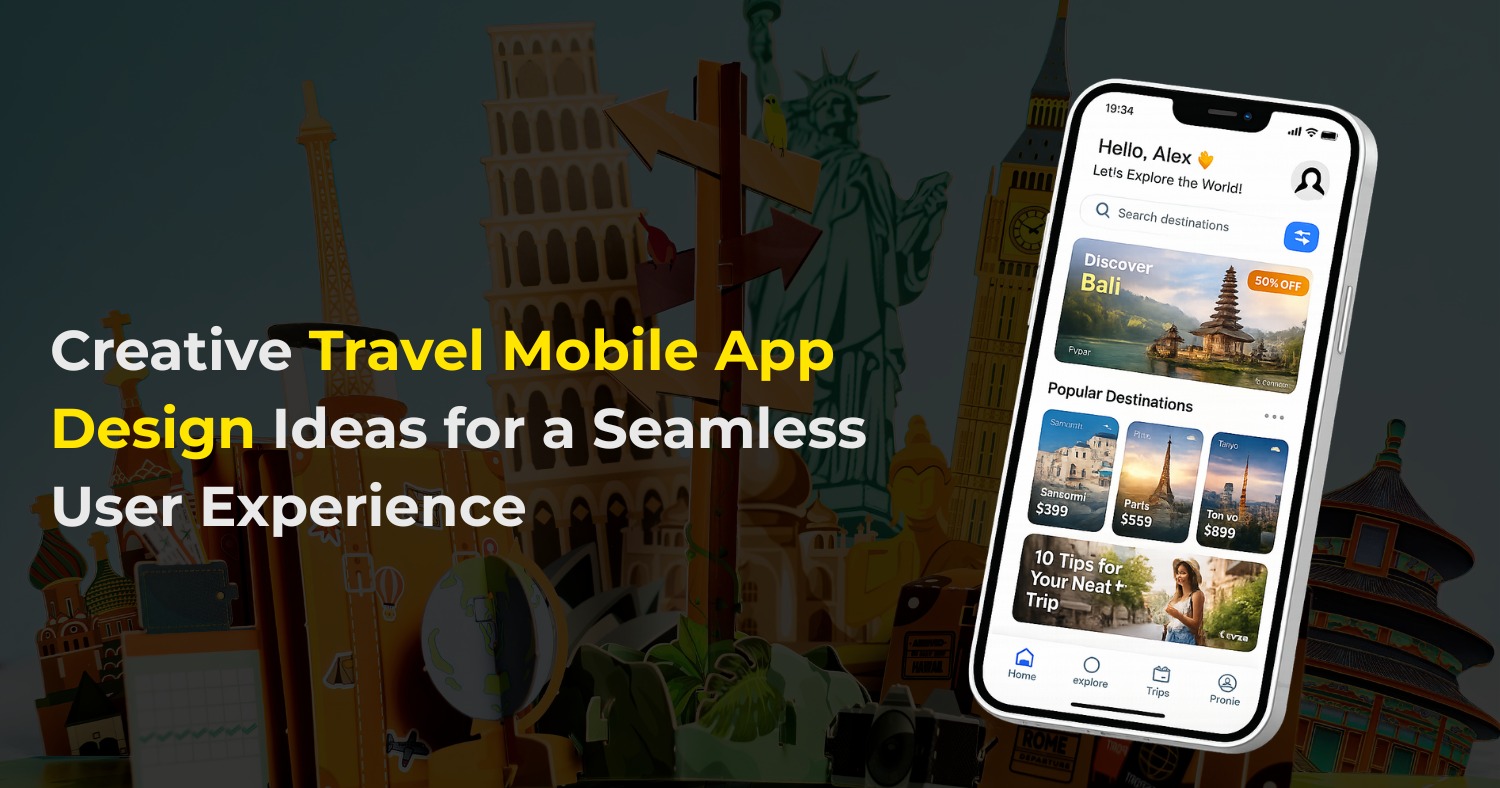
Travel has changed a lot in recent years. People no longer depend on travel agents or long phone calls to plan their trips. Today, everything happens on a mobile app—from booking flights and hotels to finding local food spots and managing itineraries. This shift has increased the Demand for Travel Apps, making travel mobile app design ideas more important than ever for delivering a smooth user experience.
A travel app is not just about features. It is about how easy, smooth, and enjoyable the experience feels. If users find the app confusing, slow, or boring, they will uninstall it quickly. That is why creative travel mobile app design plays a key role in long-term success.
Why Travel App Design Matters More Than Ever
The travel industry is highly competitive. Hundreds of apps offer similar services like bookings, navigation, and recommendations. Design is often the deciding factor that makes users choose one app over another.
Key Reasons Why Design Is Crucial
- First impression decides whether users stay or leave
- Simple design reduces confusion and booking errors
- Smooth navigation saves time and effort
- Clean layout builds trust and brand value
- Good UX increases user retention and app ratings
With growing competition and rising user expectations, travel brands are turning to a travel app development company in the USA to build apps that focus on design, usability, and performance.
Understanding User Expectations in Travel Apps
Before jumping into design ideas, it is important to understand what users expect from a travel mobile app.
What Users Want Most
- Fast loading screens
- Easy search and filters
- Clear pricing with no hidden charges
- Simple booking steps
- Offline access to important information
- Personalized suggestions
- Secure payment options
A great design is one that quietly supports all these needs without overwhelming the user.
Core Principles of Seamless Travel App Design
A seamless user experience starts with strong design principles. These principles act as a foundation for every creative idea.
Simplicity First
Travel apps should feel light and easy, especially because users often access them while traveling, multitasking, or in unfamiliar environments. A simple design helps users focus on what matters most without feeling overwhelmed.
Using clear icons allows users to understand actions quickly without reading too much text. Limiting text on screens makes information easier to scan and prevents visual clutter. When the design focuses only on essential actions, users can complete tasks such as searching, booking, or checking itineraries faster and with fewer mistakes. A simple interface improves confidence and encourages users to continue using the app.
Consistent Design Language
Consistency plays a key role in building familiarity and trust. When users see the same visual patterns throughout the app, they feel comfortable and know what to expect.
Using the same color palette across screens creates a unified look and strengthens brand identity. Uniform button styles help users recognize clickable elements instantly. Consistent fonts and spacing improve readability and give the app a clean, organized appearance. A consistent design language reduces learning effort and makes navigation feel natural, even for first-time users.
Easy Navigation
Easy navigation ensures that users always know where they are within the app and what to do next. Clear navigation reduces frustration and helps users move smoothly between different sections.
A bottom navigation bar makes it easy to access main features at any time. Clear back buttons allow users to return to previous screens without confusion. A logical screen flow ensures that each step follows naturally from the previous one, making actions like searching, booking, and reviewing details feel smooth and predictable. When navigation is simple and intuitive, users can complete tasks quickly and confidently.
Creative Travel Mobile App Design Ideas
Now, let us explore creative and practical design ideas that improve the travel app experience. These ideas focus on ease of use, personalization, and visual appeal to ensure users enjoy every step of their journey.
Personalized Home Screen Experience
The home screen sets the tone for the entire app. It should instantly feel relevant and useful to the user.
Why It Matters
A personalized home screen saves time and helps users take action quickly without searching too much.
Design Ideas:
- Show upcoming trips at the top so users can access bookings instantly
- Display personalized deals based on past searches and preferences
- Highlight popular and trending destinations
- Include quick action buttons for booking, search, and saved trips
Personalization becomes more powerful when supported by AI Recommendation Engines in Travel, which analyze user behavior and suggest relevant content that feels timely and helpful.
Smart Search with Visual Assistance
Search is one of the most-used features in a travel app, so it must be fast and smart.
Why It Matters
A strong search experience reduces effort and speeds up decision-making.
Creative Enhancements:
- Voice-based search for hands-free use
- Image-based destination search for inspiration-driven users
- Auto-suggestions while typing to reduce effort
- Popular search tags for quick discovery
This design approach reduces typing and helps users find what they want faster.
Interactive Destination Discovery
Users love to explore destinations before making decisions.
Why It Matters
Visual exploration builds excitement and confidence before booking.
Design Features:
- Swipe-based destination cards for easy browsing
- Short video previews showing real travel experiences
- Interactive photo galleries
- Weather details and the best time to visit information
This makes destination discovery fun, engaging, and informative
Minimal and Clean Booking Flow
A complicated booking process often leads to abandoned bookings.
Why It Matters
Users want quick and stress-free bookings, especially while traveling.
Best Design Practices:
- Step-by-step booking screens
- Clear progress indicators
- Editable booking details
- Transparent price breakdown with no hidden charges
A clean booking flow builds trust and improves conversion rates significantly.
Map-Based User Interface
Maps are extremely useful in travel apps, especially during trips.
Why It Matters
Maps help users explore unfamiliar places with confidence.
Creative Uses of Maps:
- Show nearby hotels and attractions
- Recommend restaurants and cafes
- Navigation with offline maps
- Real-time location sharing
A map-based UI makes exploration intuitive and practical.
Offline Access Design
Travelers often face poor or no internet connectivity.
Why It Matters
Offline access ensures reliability during flights, road trips, and in remote areas.
Offline-Friendly Features:
- Downloaded itineraries
- Saved booking confirmations
- Offline maps
- Emergency contact details
Offline screens should clearly show what content is available without internet.
Visual Itinerary Builder
Planning trips can feel overwhelming. A visual approach makes it easier.
Why It Matters
Visual planning reduces confusion and improves organization.
Design Ideas:
- Drag-and-drop daily plans
- Timeline-based itinerary view
- Color-coded activities
- Editable travel schedules
This helps users manage trips comfortably and enjoy planning.
AI-Powered Personalization
Modern travel apps use AI to deliver smarter experiences.
Why It Matters
AI helps users discover better travel options with less effort.
Design Use Cases:
- Smart destination suggestions
- Budget-based travel ideas
- Travel alerts and reminders
- Personalized travel tips
Many advanced apps use AI Recommendation Engines in Travel to create a highly tailored and engaging experience.
Simple and Secure Payment Design
Payment is one of the most sensitive steps in the user journey.
Why It Matters
Users need confidence when entering payment details.
Design Best Practices:
- Minimal payment form fields
- Multiple payment options
- Clear security indicators
- One-tap payment support
Trust-focused design increases successful transactions and reduces drop-offs.
Engaging Micro-Interactions
Small animations make a big difference.
Why It Matters
Micro-interactions provide feedback and improve usability.
Examples:
- Button hover effects
- Smooth loading animations
- Swipe gestures
- Confirmation animations
These interactions make the app feel responsive and modern.
Social Sharing and Community Design
Travel is naturally social, and users enjoy sharing experiences.
Why It Matters
Community features increase engagement and retention.
Creative Design Ideas:
- Share trip plans with friends
- Post travel reviews
- Follow other travelers
- Upload photos and experiences
Community-driven design builds loyalty and trust.
Multi-Language and Currency Support
Travel apps serve users from different regions.
Why It Matters
Localization improves comfort and usability for global users.
Design Considerations:
- Easy language switching
- Automatic currency conversion
- Local date and time formats
This ensures smooth experiences for international travelers.
Accessibility-Focused Design
Inclusive design ensures everyone can use the app comfortably.
Why It Matters
Accessibility improves reach and user satisfaction.
Key Features:
- Large, readable fonts
- Voice navigation support
- High-contrast mode
- Simple and clean layouts
Accessibility-focused design shows care for all users.
How Design Impacts the Growing Demand for Travel Apps
The Demand for Travel Apps is increasing because travelers want convenience, speed, and personalization. Apps built with strong travel mobile app design ideas stand out in crowded marketplaces by offering smoother and more engaging user experiences.
Key Design Benefits
- Higher user retention
- Better app store ratings
- Increased bookings
- Strong brand identity
This is why businesses often partner with a travel app development company in USA that understands global design trends and user behavior.
Conclusion
Creative travel mobile app design is not just about looks. It is about creating a smooth, helpful, and enjoyable experience for travelers at every step of their journey. By applying the right travel mobile app design ideas, businesses can deliver better usability, stronger engagement, and long-term success in a competitive travel market.
Frequently Asked Questions
Related Posts

24 Feb 2026
How Much Does it Cost to Build an AI Powered Dating App in the USA
AI is changing online dating. Apps now use AI to study behavior, interests, and chats for better matches and safer experiences. Things like spotting f..
Matthew Connor

29 Jan 2026
How Custom AI Chatbot Development Services Can Boost Your Sales and Support
In today’s fast-paced digital world, custom AI chatbot development services can significantly enhance both sales and customer support for businesses o..
Matthew Connor
Join the newsletter and get all the updates.
Subscribe
 +1 (443) 454-3676
 sales@whitehalltechnologies.com
 501 East Las Olas Blvd., Suite 200 and 300, Fort
Lauderdale, Florida, FL 33301
501 East Las Olas Blvd., Suite 200 and 300, Fort
Lauderdale, Florida, FL 33301


